
Recovering catalyst from a process stream is difficult when the particles are fine, valuable, and mixed with a high-viscosity liquid. Asymmetric porous metal filters, sintered porous metal filters, and crossflow filtration systems help plants separate these solids with stable flow. In well-designed systems, catalyst recovery can reach up to 99 percent, while product loss, filter change time, and waste volume are reduced.
This guide explains how asymmetric porous metal filters work, which industries use them, and how to select the correct filter element. It also answers common buyer questions about pore size, pressure, cleaning, material, service life, and total operating cost.

An asymmetric porous metal filter is a sintered metal element with a pore structure that changes through its thickness. The surface layer has smaller pores for accurate particle retention. The inner support layers have larger pores for strength, flow, and contaminant storage.
Unlike a simple uniform-pore filter, this structure places the main separation area near the surface. Catalyst particles form a controlled cake or remain concentrated near the filter skin. The result is easier cleaning, lower pressure loss, and more stable filtration.

The filter surface captures catalyst particles while the clean liquid passes through the connected metal pores. The support layers prevent deformation when the system operates under pressure or vacuum. This design is useful when the recovered catalyst must be returned to production.
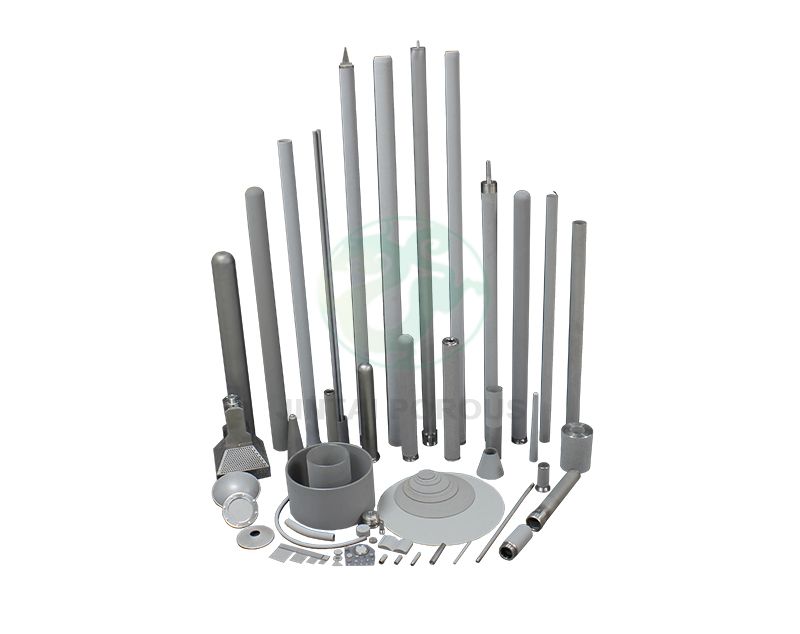
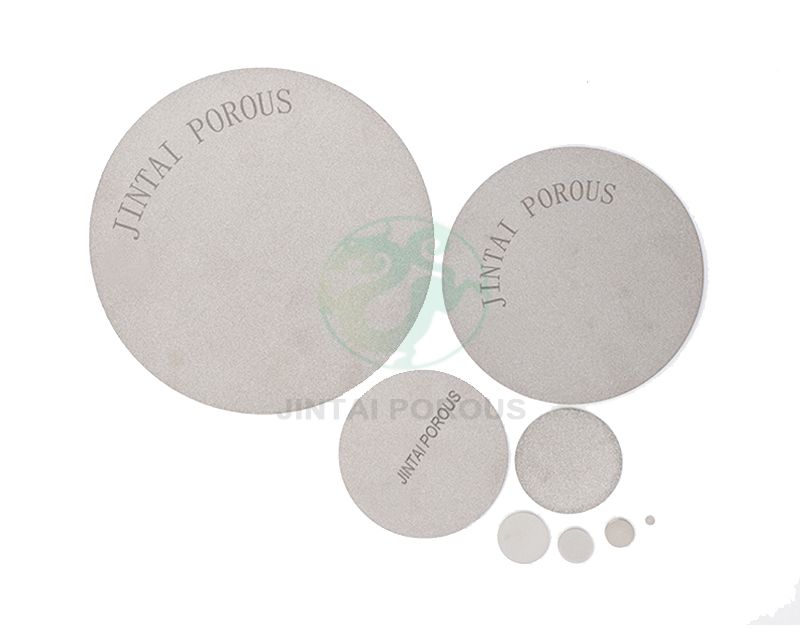
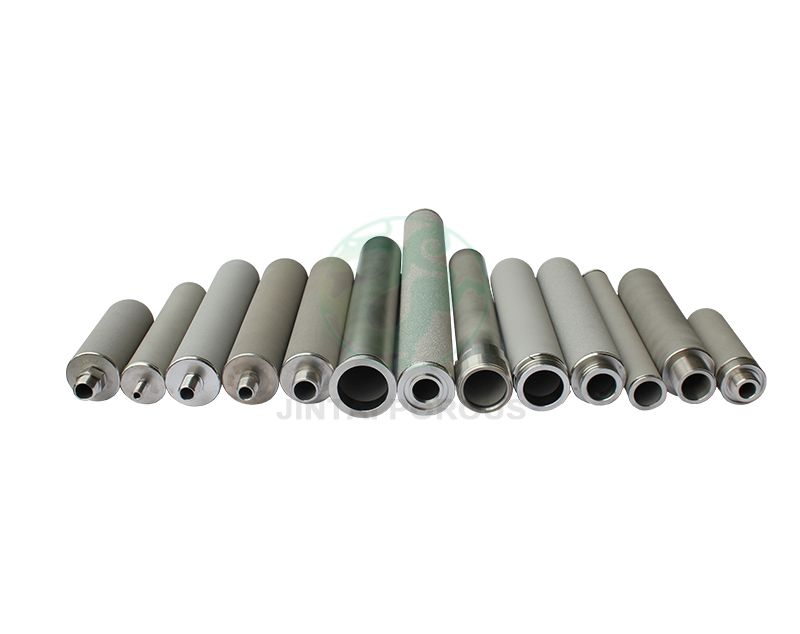
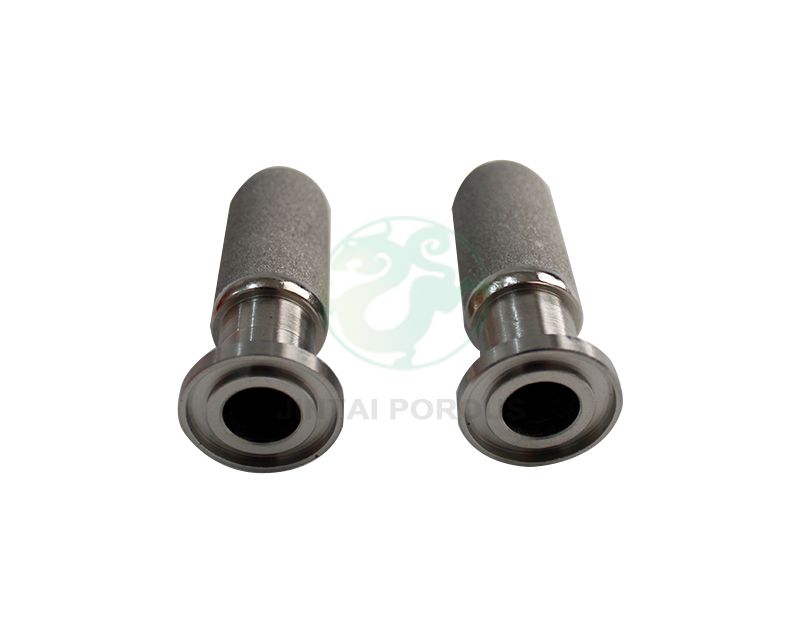
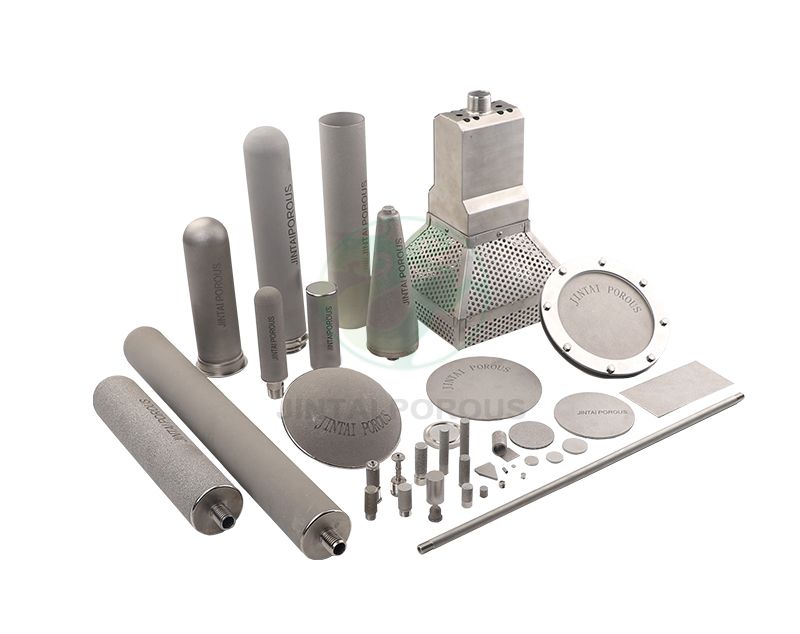
JINTAI manufactures sintered porous asymmetric filter elements for chemical, pharmaceutical, food, energy, and industrial separation applications. Common materials include stainless steel 316L, 304, nickel alloys, and other metals selected for temperature and chemical resistance.

1. What Is an Asymmetric Porous Metal Filter?
Catalysts are often more expensive than the liquid or powder that surrounds them. Platinum, palladium, rhodium, ruthenium, nickel, and other catalyst materials may be reused several times. If the separation step is weak, valuable catalyst leaves with the product stream or enters wastewater.
Many catalyst recovery systems also face high solids loading. Fine particles can blind a membrane, block a conventional filter cloth, or pass through a coarse screen. A filter must remove particles without stopping production every few hours.
How the pore structure supports catalyst recovery
- Fine catalyst particles pass through a filter with an unsuitable pore rating.
- High solids loading causes rapid blinding and rising differential pressure.
- Weak filter media deform under pressure or during backwashing.
- Liquid trapped in a disposable filter increases product and waste loss.
- Manual filter replacement increases labor, exposure risk, and downtime.
- Some filter materials corrode in acids, solvents, or high-temperature streams.
A reusable metal element addresses these problems with a defined pore structure, strong mechanical support, and cleanability. The correct design still depends on particle size, liquid viscosity, temperature, pressure, chemical composition, and required recovery rate.
2. Why Catalyst Recovery Is a Process Challenge
The most important benefit is controlled surface filtration. Instead of allowing particles to travel deep into a thick uniform medium, the asymmetric layer captures them close to the surface. This makes backpulse cleaning, reverse-flow cleaning, and controlled cake discharge more effective.
Main pain points for process engineers
| Process factor | Typical benefit of a suitable asymmetric metal filter | Why it matters |
|---|---|---|
| Catalyst recovery | Up to 99 percent in a suitable system | More valuable solid returns to production |
| Filtration rating | Often selected from 0.5 to 100 microns | Matches particle size and liquid clarity needs |
| Operating temperature | Metal elements can support high-temperature service | Less cooling before filtration |
| Cleaning cycles | Designed for repeated cleaning and reuse | Lower replacement and disposal cost |
| Pressure strength | Higher structural strength than many soft media | Safer operation during pressure pulses |
The figures above are design targets, not universal guarantees. Actual results depend on the catalyst shape, particle size distribution, feed concentration, filtration area, pressure, cleaning method, and test conditions. A pilot test should confirm the final performance.
3. How Asymmetric Filters Improve Catalyst Recovery
| Feature | Asymmetric porous metal filter | Uniform or disposable depth filter |
|---|---|---|
| Particle capture | Focused near the surface | Distributed through the media |
| Cleaning | Backwash, backpulse, or chemical cleaning | Often replaced after loading |
| Mechanical strength | High, with a sintered support structure | Depends on fiber or cloth construction |
| Product recovery | Can be designed for dry or wet catalyst discharge | Product may remain in the filter media |
| Long-term cost | Higher initial cost but reusable | Lower initial cost but recurring replacement cost |
Benefits shown by process data
A good catalyst recovery system is more than a filter element. It includes feed control, filtration, cleaning, cake removal, inspection, and return of the recovered catalyst. The following flow supports a stable operating cycle.
- Feed preparation: Keep the catalyst suspension mixed and remove large foreign objects with a coarse screen.
- Filter loading: Pump the suspension through the asymmetric porous metal element at a controlled flow rate.
- Particle capture: The fine outer layer retains the catalyst while the clarified liquid moves through the support layers.
- Differential pressure control: Monitor pressure before and after the element. Use a set pressure limit for cleaning.
- Filter cleaning: Apply reverse flow, gas backpulse, vibration, or chemical cleaning when required.
- Catalyst discharge: Collect the wet cake, concentrated slurry, or dry powder in a closed recovery container.
- Inspection and reuse: Check the element for damage, clean it, and return it to service when the flow test is acceptable.
Flow chart: Feed tank to pre-screen to asymmetric filter element to clean liquid outlet. When differential pressure reaches the set point, use backpulse or backwash to catalyst collection. Then inspect, clean, and reuse the filter element.
Surface filtration versus depth filtration
4. Step-by-Step Catalyst Recovery Process
Asymmetric porous metal filters are suitable for processes that need solid-liquid separation, gas-solid separation, or catalyst containment. Their value is highest when the solids are expensive, the liquid is aggressive, or the filter must be cleaned and reused.
5. Where Are These Filters Used?
- Recovery of precious metal catalysts from pharmaceutical reaction liquids.
- Recovery of palladium, platinum, nickel, or ruthenium catalysts from chemical batches.
- Hydrogenation and oxidation process filtration.
- Solvent recovery and fine chemical production.
- Polymer and resin catalyst separation.
- Biotechnology and pharmaceutical solid-liquid separation.
- Hot gas filtration and catalyst containment in energy systems.
- Recovery of catalyst powder from wash and regeneration streams.
For pharmaceutical production, the filter may require a polished surface, cleanroom-compatible processing, traceable materials, and sanitary connections. For chemical production, corrosion resistance and high-temperature performance may be more important than surface finish.
Common applications
Choosing a pore rating by name alone can lead to poor results. A 5 micron filter does not behave the same way in every liquid. Particle shape, particle concentration, viscosity, cake permeability, and pressure all affect the real filtration performance.
6. How to Select the Correct Filter Element
| Specification | Information to provide | Effect on filter design |
|---|---|---|
| Target particle size | Average size and smallest important particle | Sets the filtration rating and surface structure |
| Feed concentration | Grams per liter or percentage of solids | Determines cake capacity and cleaning interval |
| Liquid properties | Viscosity, solvent type, and pH | Guides pore design, flow area, and material choice |
| Temperature | Normal and maximum operating temperature | Confirms metal grade and sealing requirements |
| Operating pressure | Inlet, outlet, and cleaning pressure | Sets wall thickness and support strength |
| Cleaning method | Backwash, backpulse, ultrasonic, or chemical cleaning | Controls mechanical and chemical durability |
| Connection and dimensions | Length, diameter, flange, thread, or sanitary fitting | Ensures direct installation into the housing |
For the first quotation, buyers should send a process data sheet, drawing, sample liquid, or used filter sample when possible. JINTAI can use this information to recommend the filtration area, metal material, pore grade, end configuration, and cleaning method.
Key specifications to confirm
Stainless steel 316L is a common choice for chemical and pharmaceutical service because it offers good corrosion resistance and can be cleaned repeatedly. Stainless steel 304 may suit less aggressive liquids. Nickel alloys may be considered for stronger corrosion, high temperature, or special chemical exposure.
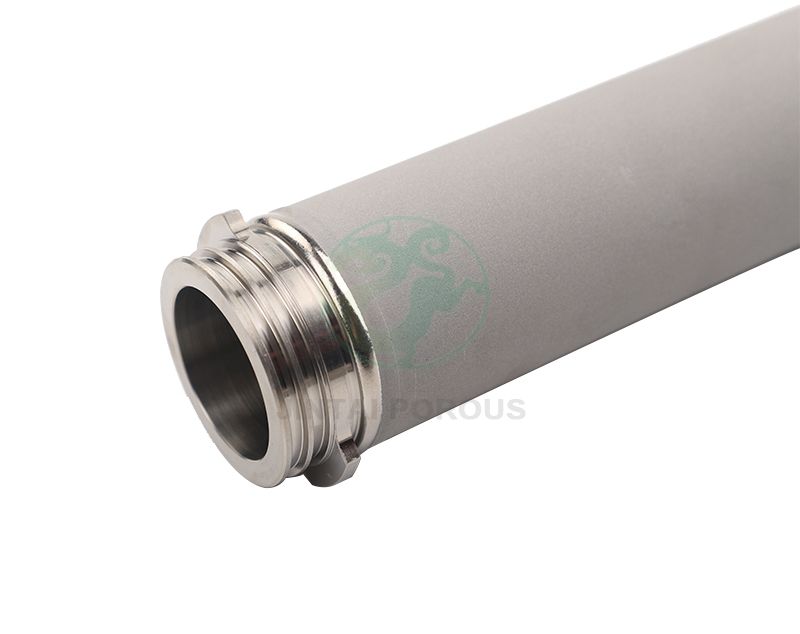
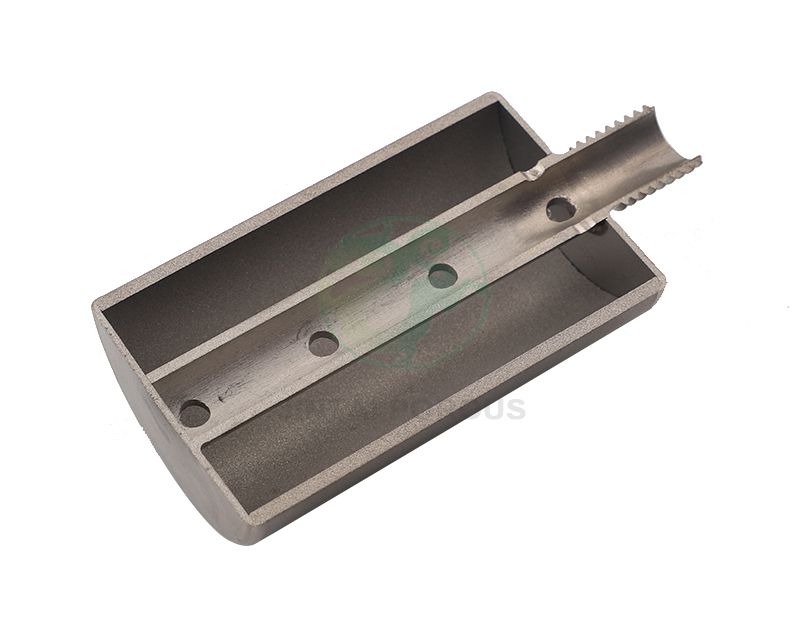
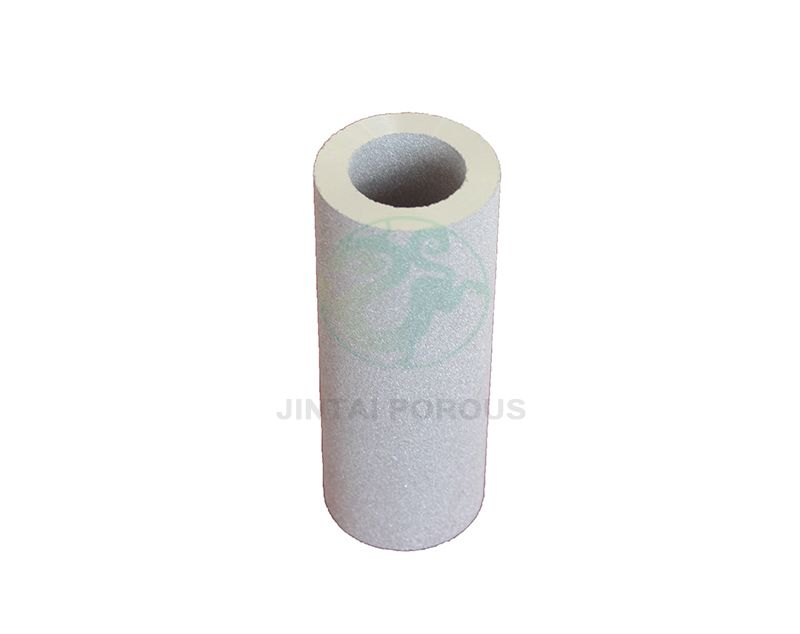
The filter may be made as a candle, tube, disc, plate, cartridge, or custom-shaped element. A multi-layer construction can combine a fine filtration skin with one or more support layers. The ends can be welded, threaded, flanged, or fitted with sanitary connections.
7. Choosing Metal Material and Filter Construction
When catalyst builds on the outer surface, the filter cake is easier to remove than solids trapped throughout a deep medium. A clean surface also restores flow more consistently. This can reduce unplanned filter changes, especially in batch processes with repeated filtration cycles.
However, cleaning must be matched to the catalyst and liquid. Excessive backpulse pressure can damage a poorly designed element or disturb a fragile cake. The cleaning sequence should be tested before full-scale installation.
Why asymmetric construction may reduce downtime
8. Common Buyer Questions
Yes, but the filter rating and operating method must match the powder. Fine particles may create a dense cake with high pressure loss. A larger filtration area, lower flow rate, or staged separation may be needed.
Can a porous metal filter recover very fine catalyst powder?
Yes. Sintered metal elements are designed for repeated use when the material, welding, and cleaning method are suitable. Inspect the element after cleaning and confirm flow or pressure performance before reuse.
Can the filter be reused?
A properly sized system may recover up to 99 percent of catalyst. The actual result depends on particle size, filter rating, leakage control, cake discharge, and sampling accuracy. A laboratory or pilot test gives a more reliable number.
What recovery rate can a buyer expect?
No filter removes all liquid by filtration alone. The final moisture level depends on pressure, air or gas displacement, cake thickness, solvent properties, and optional drying steps. A closed discharge design can still reduce product and solvent loss.
Will the filter remove all liquid from the catalyst cake?
There is no single replacement interval. A metal element may operate for months or years when it is not corroded, damaged, or permanently blocked. Replace it when inspection shows cracks, deformation, leakage, corrosion, or unacceptable flow loss.
How often should the element be replaced?
JINTAI supports overseas buyers, equipment manufacturers, and distributors that need custom sintered porous metal filter elements. The production process can be matched to the required pore structure, dimensions, metal grade, surface finish, and connection design.
For catalyst recovery projects, the most useful support is often application review. JINTAI can evaluate feed solids, target particle size, pressure, temperature, cleaning method, and installation space before recommending a filter construction.
Each project should confirm material certificates, dimensional tolerances, filtration performance, pressure testing, and cleaning compatibility. Clear technical communication at the quotation stage helps prevent installation problems and reduces the risk of selecting an unsuitable pore rating.
9. Why Work with JINTAI?
10. Final Selection Checklist
Before ordering an asymmetric porous metal filter for catalyst recovery, confirm the following points:
- Target catalyst particle size and required recovery percentage.
- Feed flow rate, solids concentration, and liquid viscosity.
- Operating and cleaning pressure.
- Normal and maximum temperature.
- Liquid pH, solvent, corrosive components, and compatibility needs.
- Required filter area and available housing dimensions.
- Metal grade, surface finish, and connection type.
- Cleaning method and expected number of reuse cycles.
- Method for collecting and weighing recovered catalyst.
- Required inspection documents and quality records.
Asymmetric porous metal filters provide a strong and reusable method for catalyst recovery. Their layered pore structure supports fine particle retention, stable flow, pressure resistance, and efficient cleaning. When the filter is correctly sized and tested, plants can recover more valuable catalyst, reduce product loss, and improve process uptime.
For a custom solution, provide JINTAI with your catalyst type, particle size, liquid properties, operating conditions, required dimensions, and cleaning method. These details allow the filter element to be designed for real process performance rather than a general catalog rating.