
October 12, 2026
Choosing between fine bubble sparging for wastewater treatment, coarse bubble aeration for industrial mixing, and Sintered Porous Metal Spargers affects oxygen transfer, fouling risk, energy consumption, and maintenance frequency. Operators commonly ask whether smaller bubbles always improve a process, how oxygen transfer efficiency changes with bubble size, and whether a porous metal gas diffuser is worth its higher purchase price. The practical answer depends on dissolved oxygen demand, liquid viscosity, solids concentration, tank geometry, gas quality, and cleaning access. This comparison explains the differences using oxygen transfer rate, standard oxygen transfer efficiency (SOTE), bubble diameter, gas holdup, and kLa rather than vague claims about “better” performance.
At first glance, both systems appear to perform the same task: gas enters a liquid through a sparger and forms bubbles. The process difference is created by bubble size, interfacial area, gas residence time, and mixing behavior. A fine bubble diffuser typically produces bubbles below approximately 3 mm under operating conditions, while coarse bubble spargers often generate bubbles above 5 mm. Actual diameter varies with pore size, gas velocity, liquid properties, hydrostatic pressure, and diffuser geometry.
Fine bubbles provide a larger gas–liquid interfacial area per unit gas volume. A simplified relationship is:
Interfacial area per unit volume, a ≈ 6εg/db
In this relationship, εg is gas holdup and db is bubble diameter. When bubble diameter decreases from 6 mm to 2 mm at a similar gas holdup, the theoretical interfacial area can increase by approximately three times. That does not automatically produce three times the oxygen transfer because bubble coalescence, surfactants, fouling, liquid turbulence, and reduced gas flow can alter the result.
Coarse bubbles behave differently. They rise faster, create stronger vertical circulation, and are less likely to be blocked by suspended solids. Their larger wake can improve tank turnover and solids suspension, especially in equalization basins, sludge holding tanks, flotation systems, and viscous process vessels. The trade-off is a shorter gas residence time and generally lower oxygen transfer efficiency per unit of air supplied.
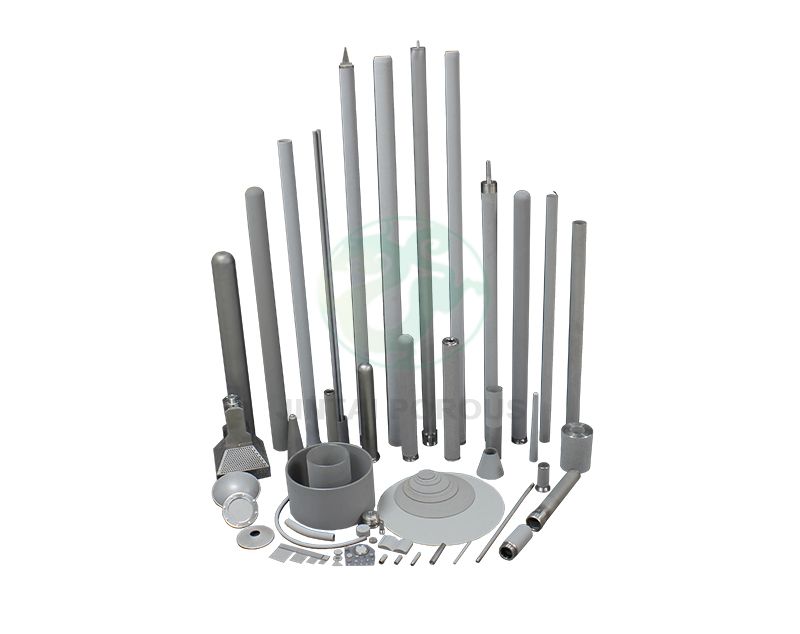
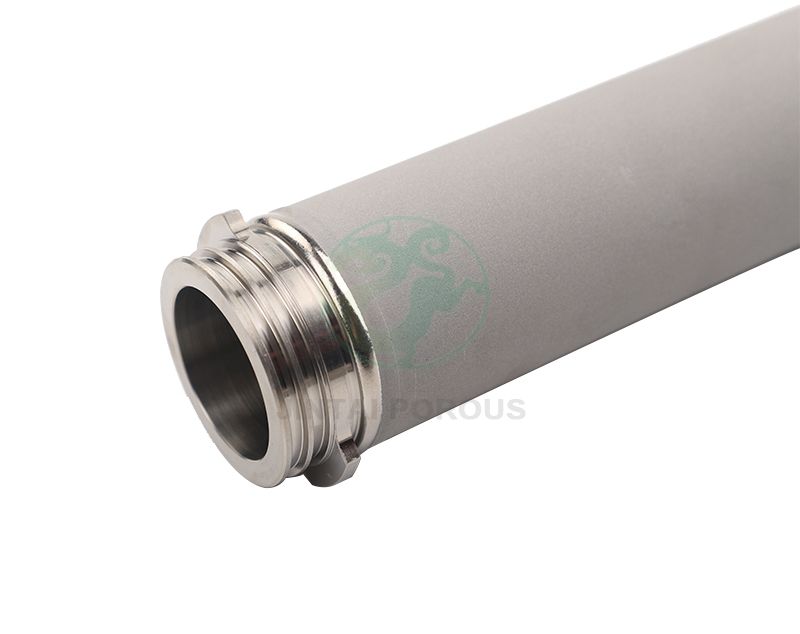
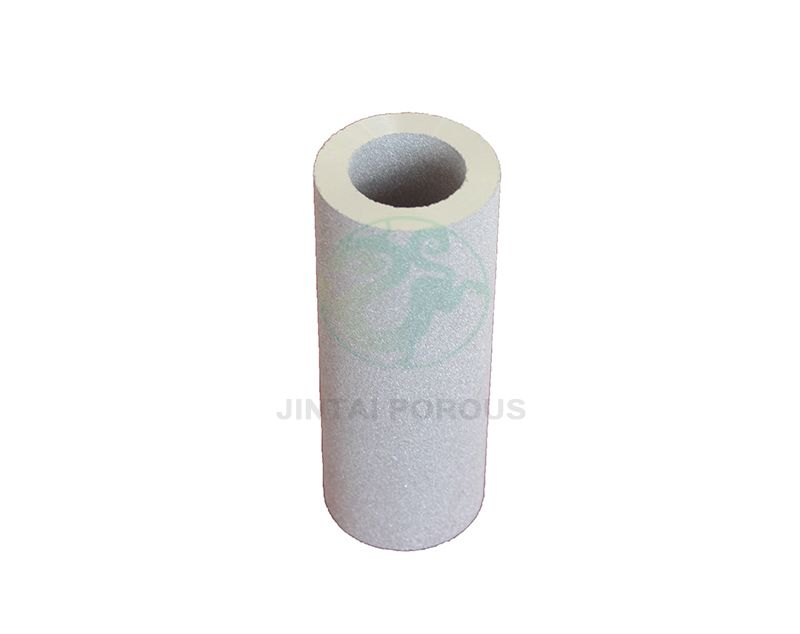
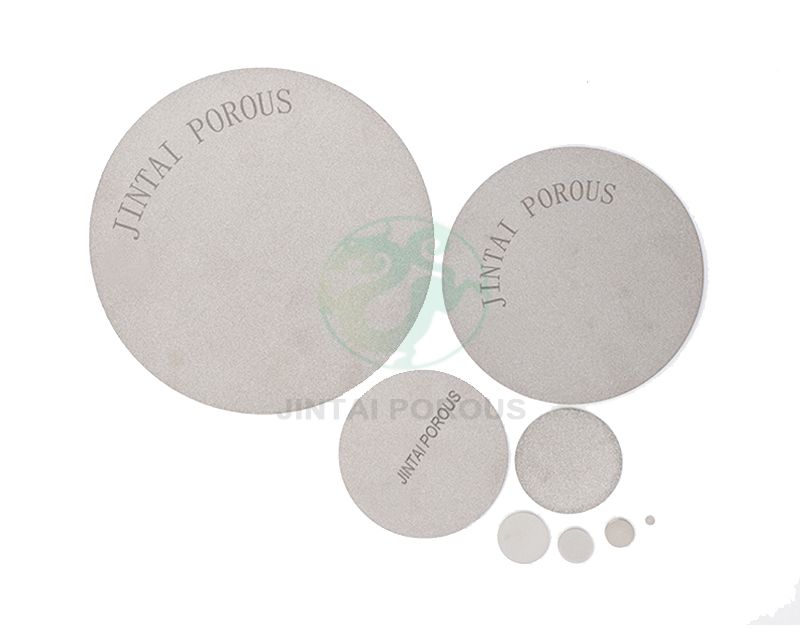
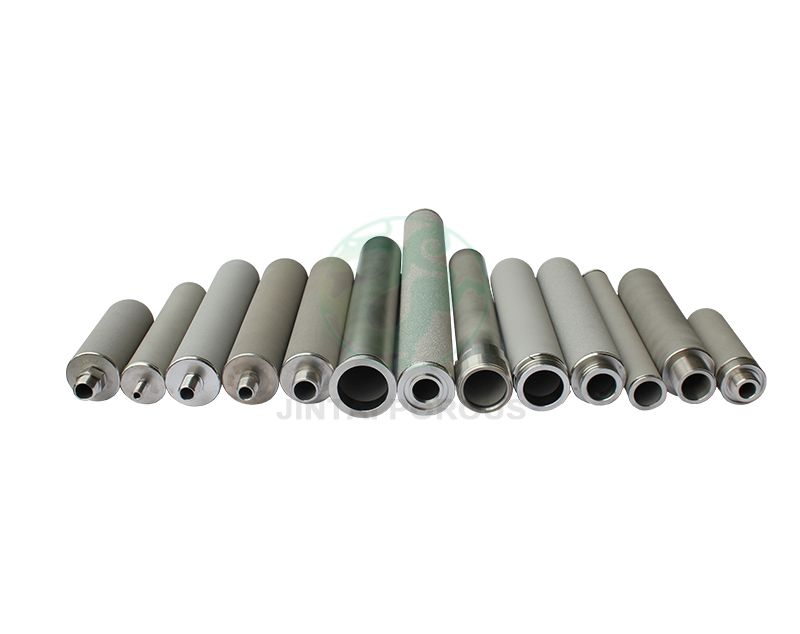
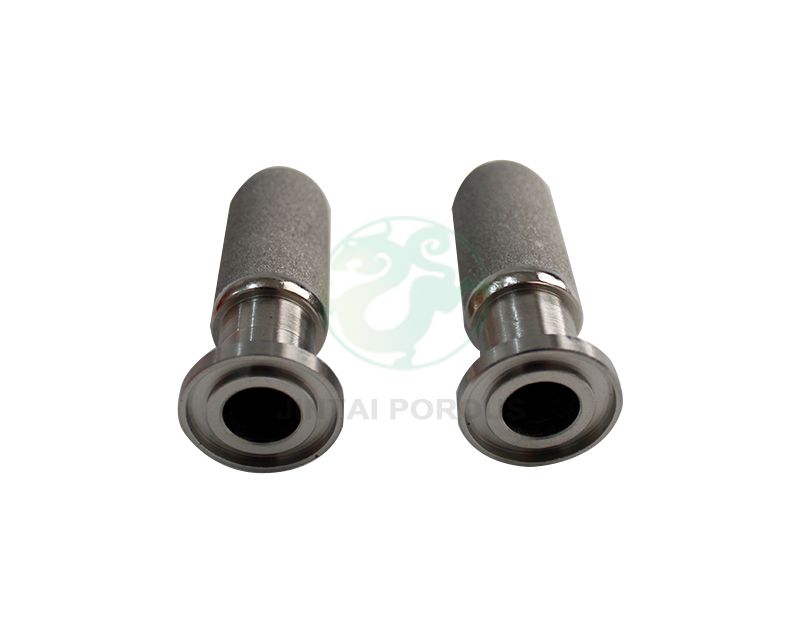
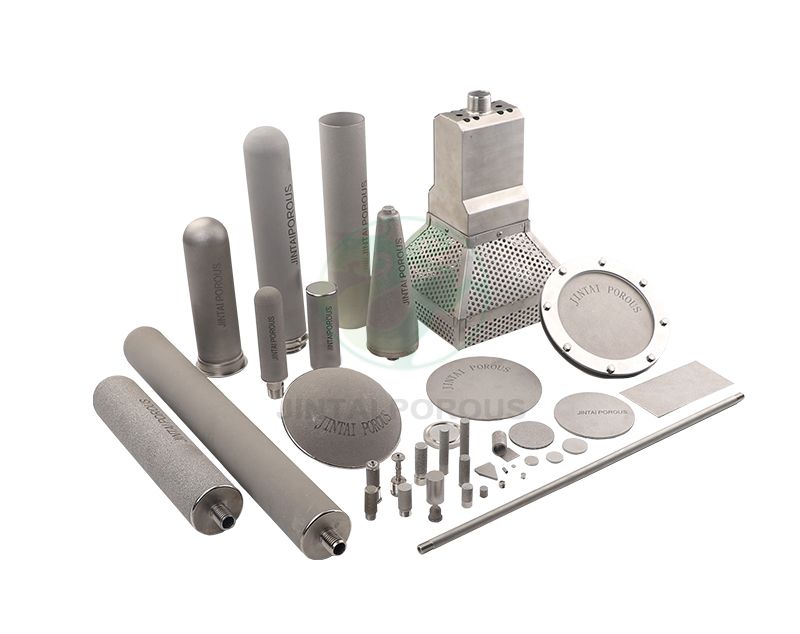
Sintered porous metal spargers are manufactured by compacting and heating metallic powder without fully melting it. The resulting interconnected pores can provide a controlled gas-distribution surface. Stainless steel grades such as 316L are frequently considered where corrosion resistance, mechanical strength, and cleanability are important. Pore ratings may range from a few micrometers to several hundred micrometers, but the final bubble size is not identical to the nominal pore size.
For example, a 20 μm porous surface may produce bubbles substantially larger than 20 μm because gas pressure must overcome liquid pressure, surface tension, and the wetting characteristics of the metal. A useful starting point for gas-entry pressure is:
ΔPcapillary ≈ 4σ cosθ/dp
Here, σ represents surface tension, θ is the contact angle, and dp is pore diameter. This is why gas quality, liquid contamination, and surface wetting matter when selecting a Sintered Porous Metal Sparger.
| Parameter | Fine Bubble Sparging | Coarse Bubble Sparging | Process Meaning |
|---|---|---|---|
| Typical operating bubble diameter | Approximately 1–3 mm in many water-based systems | Approximately 5–15 mm, depending on nozzle and gas rate | Smaller bubbles provide more interfacial area; larger bubbles provide stronger circulation |
| Oxygen transfer efficiency | Often higher; field SOTE commonly falls around 8–20% per meter of submergence in aeration applications | Often lower; field SOTE may be approximately 4–12% per meter, depending on design | Fine bubbles can reduce blower energy per kilogram of oxygen transferred |
| Oxygen transfer rate | High when bubble distribution remains uniform and surfaces are clean | Moderate per unit air volume, but useful where mixing is the primary objective | OTR depends on kLa, saturation deficit, temperature, pressure, and alpha factor |
| Mixing intensity | Moderate; may require additional mixers in deep or solids-heavy tanks | High vertical circulation and plume action | Coarse bubbles are often better for preventing settling |
| Gas residence time | Longer because rise velocity is lower | Shorter because bubbles rise rapidly | Longer contact time generally supports gas absorption |
| Clogging sensitivity | Higher, especially with oily liquids, biological growth, or untreated solids | Lower in many dirty-liquid services | Fine-pore systems require better filtration and cleaning procedures |
| Maintenance frequency | May require periodic chemical cleaning, backflushing, or replacement | Usually simpler to inspect and unblock | Maintenance cost can reverse the apparent energy advantage |
| Typical installation depth | Performs well in deeper tanks where residence time is valuable | Works in shallow or deep tanks when circulation is prioritized | Tank depth changes both hydrostatic pressure and transfer performance |
| Best-known applications | Activated sludge, aquaculture, ozone dissolution, oxygenation, fermentation | Equalization, sludge storage, grit suspension, stripping, chemical reaction mixing | Application conditions should determine the choice |
These ranges are design references rather than guaranteed results. A diffuser operating at 2.5 m submergence, 20°C, clean water, and stable airflow will not deliver the same SOTE as the same unit operating in wastewater containing surfactants and suspended solids. In contaminated water, the alpha factor can fall from approximately 0.8–1.0 in clean water to 0.3–0.7 or lower, reducing the actual oxygen transfer rate.
The practical decision becomes clearer when the process objective is separated into oxygenation and mixing. Fine bubble sparging is usually selected when the plant must transfer oxygen with the lowest practical air volume. Coarse bubble sparging is often selected when the plant must keep solids moving, strip volatile compounds, or distribute chemicals throughout a tank.
In an activated-sludge basin, oxygen demand is calculated from biological loading, ammonia oxidation, endogenous respiration, and safety factors. The oxygen transfer rate can be represented as:
OTR = KLa(C* − CL)V
where KLa is the volumetric mass-transfer coefficient, C* is saturation dissolved oxygen concentration, CL is the operating dissolved oxygen concentration, and V is liquid volume. Fine bubbles can increase KLa by increasing interfacial area and contact time.
However, an operator should not select fine bubbles solely from a brochure SOTE number. Membrane fouling, uneven air distribution, excessive diffuser density, and insufficient mixing may create oxygen gradients. A basin may show an average dissolved oxygen concentration of 2.0 mg/L while zones near the tank floor remain poorly mixed. A design review should therefore examine oxygen profiles, airflow per diffuser, pressure drop, and solids suspension—not only the stated transfer efficiency.
Coarse bubble systems generate larger bubble wakes and stronger plume-induced circulation. This can be valuable in a tank containing 1–5% suspended solids, where fine bubbles may transfer oxygen efficiently but fail to keep heavier particles suspended. In a sludge holding tank, for example, a coarse bubble grid may reduce settled zones even when its oxygen transfer efficiency is lower.
Coarse bubbles can also tolerate intermittent operation and variable airflow. Their larger flow passages are less vulnerable to partial blockage, although no sparger is immune to scaling or biological fouling. If the process requires both high oxygen transfer and strong mixing, a hybrid design—fine bubble diffusers combined with mechanical mixers or strategically placed coarse bubble lanes—may outperform either system used alone.
| Scenario | Preferred Starting Option | Reason | Important Limitation |
|---|---|---|---|
| Municipal activated-sludge aeration | Fine bubble diffuser or Sintered Porous Metal Sparger | High oxygen demand and long-term energy savings | Requires cleaning and airflow balancing |
| Equalization basin with variable solids | Coarse bubble sparger | Strong circulation and lower clogging risk | Higher air consumption for the same oxygen transfer |
| Fermentation or bioreactor service | Fine-pore stainless steel sparger | Controlled gas dispersion and hygienic construction | Validation of cleanability and sterilization is essential |
| Aquaculture tank | Fine bubble system with adequate circulation | Efficient oxygenation at moderate airflow | Small pores can foul in feed-rich water |
| Ozone or oxygen injection | Fine bubble or porous metal diffuser | Improves gas dissolution and reduces off-gas load | Material compatibility with ozone must be checked |
| High-viscosity chemical liquid | Coarse bubble or engineered porous metal design | Maintains circulation and reduces stagnant regions | Bubble breakup and pressure drop require pilot testing |
For a retrofit, tank geometry is just as important as diffuser type. A diffuser mounted too close to the floor may collect settled solids; one installed too high may lose effective contact depth. Air header pressure, branch balancing, isolation valves, and cleaning access should be included in the design package.
Fine bubble sparging often has a higher initial equipment cost because it may require more diffuser elements, air-balancing components, filtration, and cleaning provisions. A coarse bubble grid may cost less to purchase and install, particularly in a large equalization basin. Comparing only the initial quotation can therefore produce the wrong decision.
Consider a simplified aeration example. Suppose a plant must transfer 100 kg of oxygen per day. If a fine bubble system achieves an actual field oxygen transfer efficiency of 15% and a coarse bubble system achieves 8%, the required air mass is approximately:
The coarse bubble option would require approximately 87% more air under these simplified conditions. Actual blower power depends on airflow, discharge pressure, altitude, temperature, and efficiency. If the aeration system operates continuously, the additional electricity may exceed the original equipment-price difference within one to three years. If the basin operates only four hours per day or mixing is more important than oxygen transfer, the coarse bubble system may remain more economical.
Maintenance changes the calculation. A fine bubble diffuser that loses 25% of its effective airflow because of fouling can increase blower pressure and create uneven oxygen distribution. A cleaning program using formic acid, citric acid, or another compatible chemical may restore performance, but chemical compatibility and worker safety must be assessed. In contrast, a coarse bubble sparger may need less frequent intervention but consume more energy every operating hour.
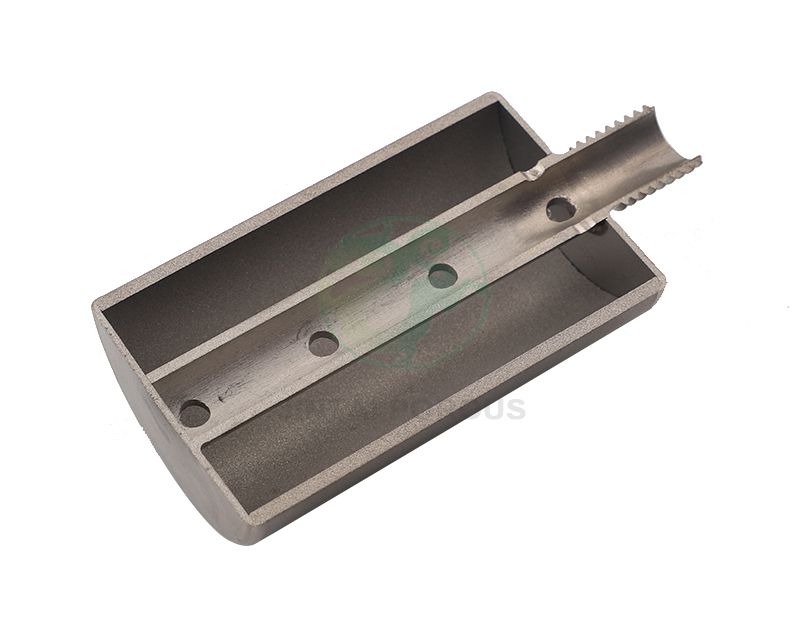
JINTAI Sintered Porous Metal Spargers are best evaluated as engineered components rather than automatically treated as a universal replacement for membrane diffusers or coarse bubble pipes. Their potential advantages include a rigid stainless-steel body, controlled pore structure, resistance to mechanical damage, and suitability for applications requiring repeated cleaning. The correct specification should include material grade, pore rating, active area, maximum gas flow, pressure drop, liquid compatibility, connection type, and cleaning method.
For a JINTAI quotation, buyers should request performance data under conditions close to the actual process: gas type, liquid temperature, submergence depth, viscosity, solids concentration, and operating airflow. A clean-water test alone may overstate field performance in wastewater or fermentation broth. Images of the installed sparger arrangement, pore surface, header connection, and cleaning setup can also help the engineering team verify whether the proposed design matches the tank.
One wastewater operator responsible for a 1,200 m³ biological basin described a recurring problem after switching from coarse bubble pipes to fine bubble panels. The plant reduced blower airflow from roughly 1,050 Nm³/h to 820 Nm³/h while maintaining a dissolved oxygen target near 2.0 mg/L. Electricity consumption fell during normal loading, but after approximately eight months, several panels showed uneven bubbling. The operator traced the problem to grease accumulation and inadequate air filtration rather than a failure of the bubble-transfer principle. After cleaning the panels and correcting condensate drainage, airflow distribution improved, but the maintenance schedule became more demanding.
A second case involved a 300 m³ sludge holding tank operating at approximately 2.5% total solids. The plant tested fine bubble diffusers and found good local oxygenation but visible settling near corners. A coarse bubble grid produced stronger circulation and reduced the settled layer without adding a mechanical mixer. The plant accepted higher air consumption because the key performance indicator was solids suspension, not oxygen transfer per kilowatt-hour.
These experiences reflect the most consistent operator feedback: fine bubbles are appreciated when energy use and oxygen transfer dominate the operating cost, while coarse bubbles are valued when reliability, solids movement, and tolerance of dirty liquids dominate. Users also tend to judge porous metal spargers favorably when the unit can be removed, cleaned, and reinstalled without damaging the active surface. Complaints usually involve incorrect airflow sizing, insufficient prefiltration, or unrealistic expectations about pore size and bubble diameter.
This is the strongest starting point for activated sludge, aquaculture oxygenation, and other processes where the main target is oxygen transfer per unit of blower power. Confirm mixing capacity and fouling control before finalizing the design.
This option is practical for equalization basins, sludge storage, grit-prone tanks, and liquids with irregular solids loading. It is not automatically the lowest-cost choice over a 10-year operating period if the air system runs continuously.
This option deserves detailed review where mechanical durability, material compatibility, repeated cleaning, gas dissolution, or hygienic construction matters. Ask for pressure-drop curves and process-specific testing rather than relying only on nominal pore size.
Fine bubbles can provide efficient oxygen transfer while coarse bubbles or mechanical mixers address dead zones and settled solids. The additional equipment may cost more initially but can prevent underperformance caused by forcing one device to perform two conflicting duties.
Fine bubble sparging is suitable for:
Fine bubble sparging may be unsuitable for:
Coarse bubble sparging is suitable for:
Coarse bubble sparging may be unsuitable for:
Before purchasing, define the gas type, liquid composition, temperature, viscosity, solids concentration, tank depth, target dissolved oxygen, operating hours, and acceptable pressure drop. Then compare the full life-cycle cost: sparger purchase, blower power, cleaning chemicals, labor, replacement interval, downtime, and disposal. Request a process-specific test whenever the application involves high viscosity, surfactants, ozone, solvents, fermentation broth, or more than approximately 1% suspended solids.
The most defensible decision is not “fine bubbles are always better” or “coarse bubbles are always more reliable.” Fine bubbles usually suit oxygen-transfer-led processes; coarse bubbles usually suit mixing-led processes; and JINTAI Sintered Porous Metal Spargers merit consideration where controlled gas dispersion, stainless-steel durability, and cleanability justify a detailed engineering review. If you are comparing fine bubble sparging for wastewater treatment, coarse bubble aeration for industrial mixing, or a porous metal gas diffuser, prepare your operating data and request a matched specification, pressure-drop curve, cleaning recommendation, and installation image before making the final purchase.