
October 09, 2026

Stainless Steel vs Titanium Porous Metal Components is a key material choice for filters, gas diffusers, spargers, and medical devices. Engineers must compare corrosion resistance, pore size control, and total cost before selecting a material. Stainless steel porous components often suit industrial filtration and high-temperature service. Titanium porous components are valued for low density, biocompatibility, and resistance to chlorides. The correct choice depends on pressure, temperature, fluid chemistry, strength, and service life. This guide explains the differences in a clear way and shows where each material performs best.
Stainless steel is usually the better choice for general industrial filtration, gas distribution, and cost control. Titanium is usually the better choice when low weight, high chloride resistance, biocompatibility, or chemical stability is required. Both materials can provide controlled pore sizes from about 0.5 to 100 microns, with typical open porosity from 20 to 45 percent. The final decision should be based on the working fluid, operating temperature, pressure drop, cleaning method, and required service life.
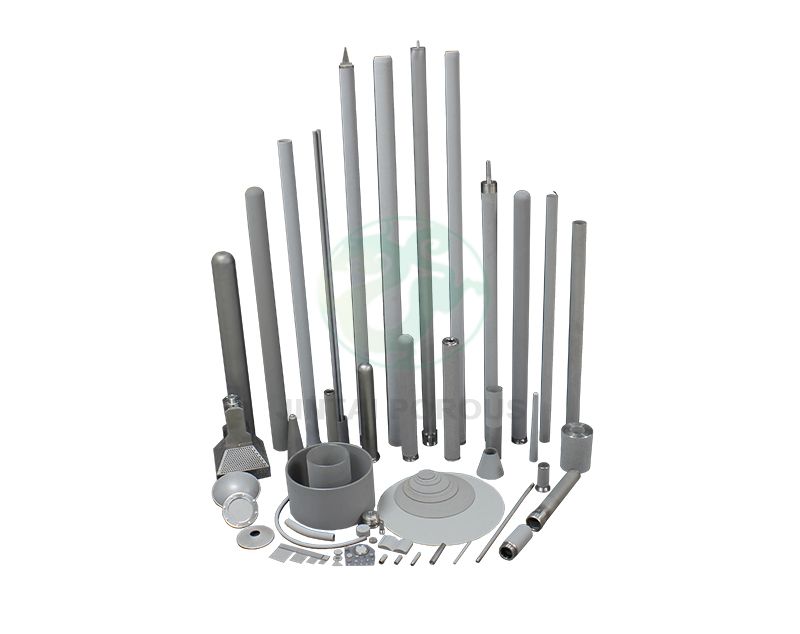
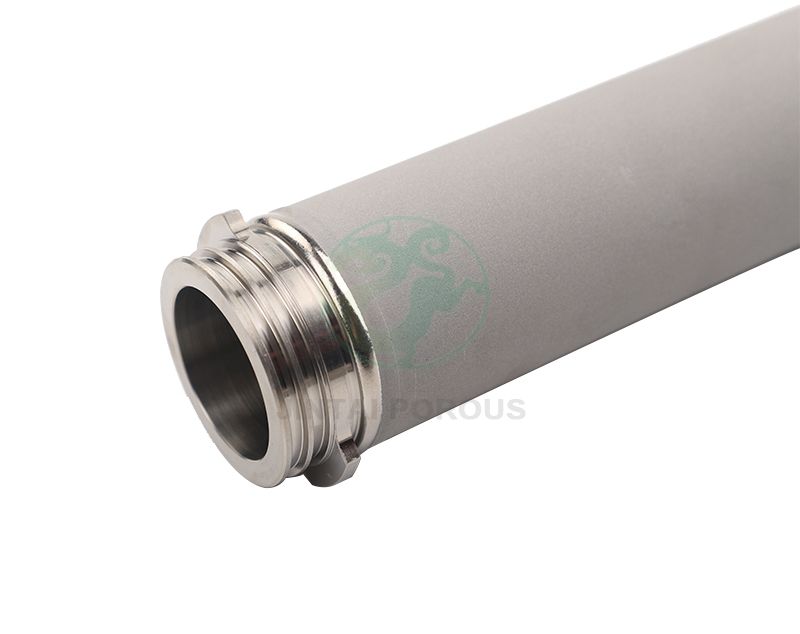
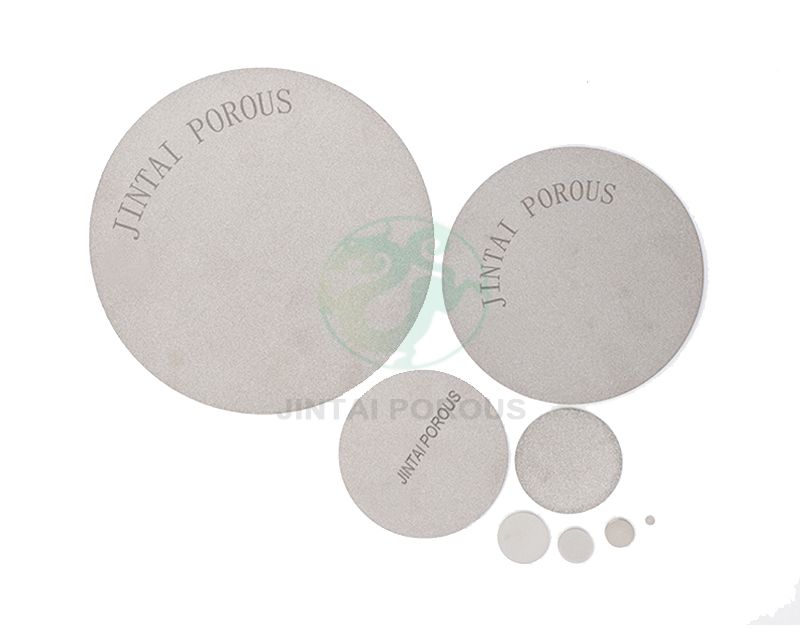
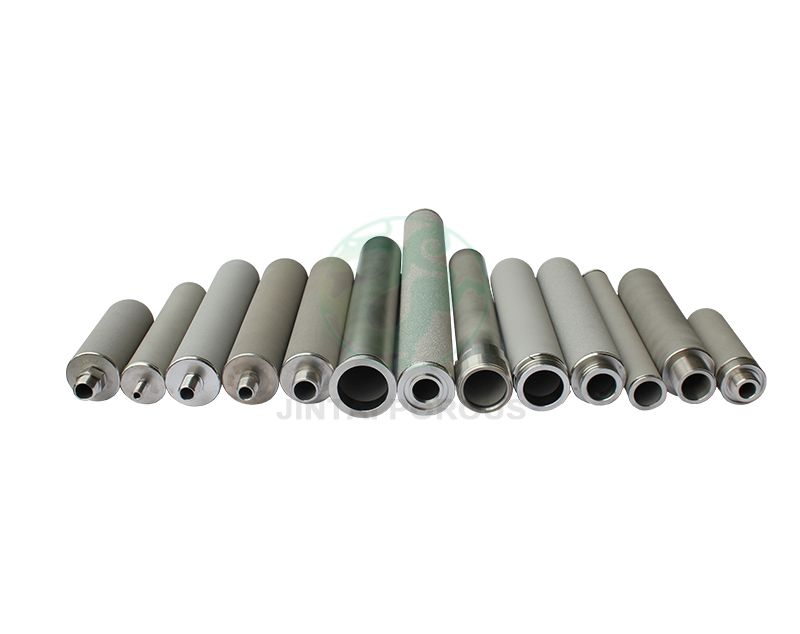
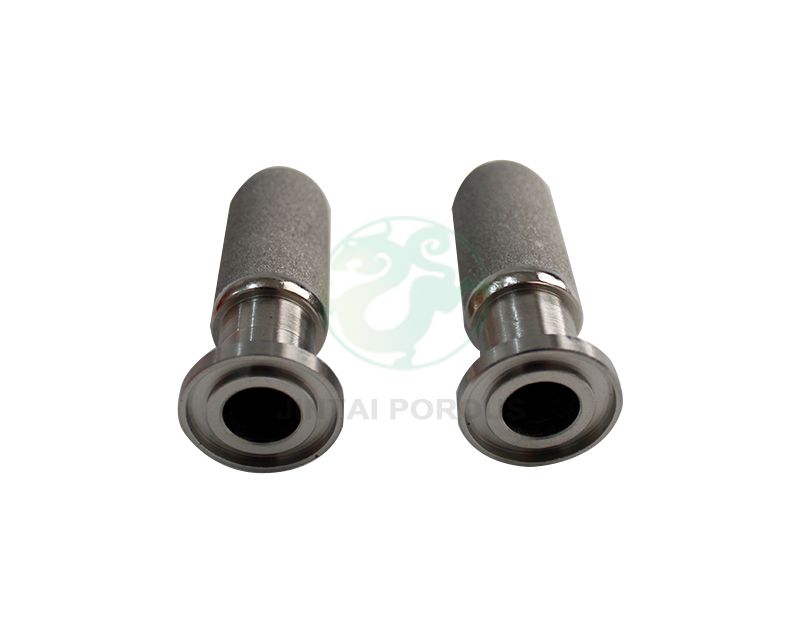
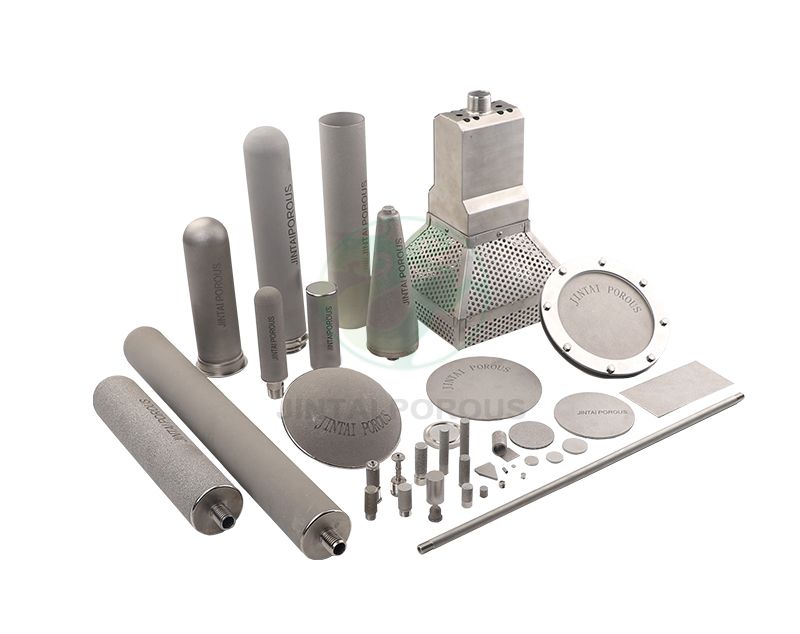
Both materials can be used to make Sintered Porous Metal Components. The basic process starts with metal powder. The powder is compacted in a mold and heated below its melting point. This process is called powder metallurgy.
Common stainless steel grades include 316L and 304L. Grade 316L contains molybdenum, which improves resistance to chlorides and many process chemicals. Titanium components are commonly made from commercially pure titanium or Ti-6Al-4V alloy. Commercially pure titanium is often selected for chemical equipment and medical applications. Ti-6Al-4V is used when higher mechanical strength is needed.
| Property | 316L Stainless Steel | Commercially Pure Titanium | Ti-6Al-4V Titanium Alloy |
|---|---|---|---|
| Density | About 7.9 to 8.0 g/cm3 | About 4.5 g/cm3 | About 4.4 g/cm3 |
| Typical tensile strength | About 485 to 620 MPa, depending on condition | About 240 to 550 MPa, depending on grade | About 895 MPa or higher in many product conditions |
| Melting range | About 1370 to 1400 C | About 1660 to 1670 C | About 1600 to 1660 C |
| Common use | Industrial filters, silencers, spargers, and flow restrictors | Chemical processing, seawater systems, and medical devices | High-strength aerospace and medical applications |
JINTAI produces porous metal parts by controlling powder size, compaction pressure, sintering temperature, and holding time. These variables affect pore size, permeability, strength, and dimensional stability. A production lot can be checked for outer dimensions, weight, porosity, air flow, bubble point, and surface condition.
316L stainless steel offers good resistance to water, many organic chemicals, and moderate chloride exposure. It can suffer from pitting or crevice corrosion in hot salt water, concentrated chlorides, and some acidic solutions. Surface contamination and poor cleaning can also reduce corrosion resistance.
Stainless steel is often suitable for:
Titanium forms a stable oxide layer when exposed to air or water. This layer gives titanium strong resistance to seawater and many chloride solutions. Titanium is also resistant to many oxidizing chemicals. However, titanium is not suitable for every chemical. Strong reducing acids, some hot concentrated acids, and environments that damage the oxide layer require a detailed compatibility review.
Titanium is often selected for:
| Environment | Preferred material | Reason |
|---|---|---|
| Clean compressed air | 316L stainless steel | Lower cost and sufficient corrosion resistance |
| Seawater with high chloride content | Titanium | Better resistance to chloride attack in many conditions |
| Food and beverage processing | 316L stainless steel | Good cleanability and broad industrial availability |
| Implantable medical structure | Titanium | Low density and established biocompatibility history |
Pore size controls particle retention and fluid flow. Typical sintered porous metal components use pore sizes from 0.5 to 100 microns. Coarser structures may be made for gas distribution and liquid flow. Finer structures are used for particle filtration and sterile gas systems.
A smaller pore size normally increases filtration efficiency. It also increases pressure drop. A larger pore size normally provides higher flow at a lower pressure drop. The design must balance filtration performance and energy use.
Open porosity is the connected empty space inside the part. Many porous metal components have an open porosity between 20 and 45 percent. The actual value depends on powder shape, powder size, compacting pressure, and sintering conditions.
Permeability can be measured with air or liquid flow tests. A test report should state the test fluid, temperature, pressure difference, flow rate, and part size. Without these details, two permeability values cannot be compared fairly.
| Design target | Typical range or method | Effect on performance |
|---|---|---|
| Nominal pore size | 0.5 to 100 microns | Controls particle retention and flow |
| Open porosity | 20 to 45 percent | Controls internal flow volume and permeability |
| Bubble point | Measured with a suitable wetting liquid | Checks the largest connected pore |
| Pressure drop | Recorded at a specified flow rate | Shows the energy needed to move fluid |
Stainless steel generally provides high stiffness and good resistance to mechanical shock. It is a practical choice for thick filter discs, sintered filter tubes, and pressure-loaded housings. Titanium provides a high strength-to-weight ratio. It is useful when the component must be strong but light.
Porous materials are weaker than their solid parent metals because pores reduce the load-bearing area. For this reason, the design must include a safety factor. Pressure testing should be completed on the finished part, not only on a solid test coupon.
Both materials can operate at temperatures far above common polymer filter limits. The actual limit depends on the alloy, wall thickness, atmosphere, pressure, and thermal cycling. Stainless steel can lose strength at high temperature. Titanium can absorb oxygen or hydrogen at elevated temperatures, which may affect ductility.
Titanium has about 43 percent lower density than 316L stainless steel. A titanium part with the same external volume can be much lighter. This benefit is important for portable systems, aerospace equipment, and equipment installed at height.
316L stainless steel powder, tooling, and machining are widely available. This usually makes stainless steel the lower-cost option for standard porous filters. Titanium powder and machining generally cost more. Production may also require tighter control of the sintering atmosphere.
| Cost factor | Stainless steel | Titanium |
|---|---|---|
| Raw material availability | High | Moderate |
| Machining difficulty | Moderate | Higher |
| Typical initial component cost | Lower | Higher |
| Best cost advantage | High-volume industrial parts | Long-life parts in severe environments |
Initial price is only one part of the decision. A titanium filter may cost more but last longer in seawater. A stainless steel filter may be more economical in clean air or mild process water. The total cost should include replacement parts, cleaning, downtime, labor, energy use, and disposal.
A reliable supplier should define acceptance criteria before production. JINTAI can use dimensional inspection, weighing, air permeability testing, bubble point testing, and pressure testing to confirm porous metal component quality.
ASTM B243 provides terminology used in powder metallurgy. ASTM F316 is commonly used for determining pore size characteristics by bubble point and mean flow methods. ASTM F67 covers unalloyed titanium for surgical implant applications. ASTM F136 covers wrought titanium alloy for surgical implants. Medical applications may also require a biological evaluation based on ISO 10993.
These standards do not replace an application-specific test plan. The test method must match the part shape, pore structure, fluid, and operating conditions.
| Inspection item | Example control metric | Why it matters |
|---|---|---|
| Material grade | Mill certificate and chemical analysis | Confirms corrosion and mechanical properties |
| Dimensions | Critical dimensions recorded in millimeters | Ensures correct fit and sealing |
| Porosity | Target range set by design | Controls flow and strength |
| Bubble point | Measured against an approved range | Checks the largest connected pore |
| Pressure test | Specified pressure, hold time, and leakage limit | Reduces the risk of failure in service |
| Surface cleanliness | Visual inspection and cleaning record | Prevents contamination of the process fluid |
Step 1: Define the fluid, gas, temperature, pressure, and flow rate.
Step 2: Identify the required pore size and particle retention level.
Step 3: Check chloride, acid, alkaline, and oxidizing exposure.
Step 4: Compare weight, strength, cleaning method, and service life.
Step 5: Select 316L stainless steel for most standard industrial uses when compatible.
Step 6: Select titanium for severe chloride exposure, low weight, or biocompatible designs.
Step 7: Confirm the choice with a prototype and application test.
Step 8: Approve the drawing, specification, and inspection plan.
Powder selection
Then compacting and mold forming
Then controlled-atmosphere sintering
Then sizing, machining, or welding
Then cleaning and surface treatment
Then dimensional and flow inspection
Then pressure and leak testing
Then final documentation and shipment
Prototype testing is useful when the application has a high pressure drop, difficult fluid chemistry, or strict cleanliness requirements. A small test program can compare two materials under the same flow rate, temperature, pressure, and cleaning cycle.
Stainless steel porous filters are common in fuel systems, hydraulic circuits, process water, compressed air, and gas filtration. Their rigid structure supports repeated cleaning by backflushing, ultrasonic cleaning, or controlled chemical cleaning.
Sintered porous metal spargers produce many small gas bubbles. Smaller bubbles can increase gas-liquid contact area. The result depends on pore size, gas pressure, liquid viscosity, and sparger geometry.
Titanium porous structures are used in selected medical and laboratory applications because titanium has low density and good biological compatibility. The surface structure can also support tissue attachment in certain implant designs. Medical parts require controlled materials, traceability, cleaning, and biological evaluation.
Titanium porous filters can be considered for seawater, brine, and chloride-rich systems. The design team should still review galvanic effects, temperature, fluid velocity, and possible deposits. Titanium is not automatically suitable for every chemical process.
Stainless steel is better for many general industrial filters because it costs less and is widely available. Titanium is better when the filter faces severe chloride exposure, weight limits, or medical requirements.
Not in every design. Solid titanium has a high strength-to-weight ratio, but porous strength depends on porosity, pore shape, wall thickness, and sintering quality. A stainless steel part may carry a higher absolute load because stainless steel has higher density and stiffness.
The pore size should match the required particle retention and flow rate. Common values range from 0.5 to 100 microns. The design should also check pressure drop, bubble point, and cleaning performance.
Yes. Cleaning methods may include backflushing, ultrasonic cleaning, solvent cleaning, or chemical cleaning. The method must be compatible with the alloy and the retained contaminant. Thermal cycling should be controlled to reduce distortion.
Sintered metal components can provide higher temperature resistance, greater mechanical rigidity, and repeated cleaning capability. They are useful when a polymer filter would soften, swell, crack, or release particles.
Provide the material preference, part drawing, pore size, flow rate, fluid type, operating temperature, working pressure, connection type, cleaning method, surface finish, and inspection requirements. These details help JINTAI recommend a practical design and prepare a measurable quality plan.
Choosing between stainless steel and titanium porous metal components requires more than comparing material prices. Stainless steel is a strong and economical option for many industrial filtration, gas distribution, and process equipment applications. Titanium offers lower weight and strong resistance in many chloride-rich environments. It is also widely considered for biocompatible designs. The best choice depends on pore size, porosity, pressure drop, temperature, fluid chemistry, cleaning method, and required service life. By using controlled powder metallurgy, documented sintering, and measurable inspection methods, JINTAI can help develop sintered porous metal components that match the actual needs of the application.