
September 22, 2026
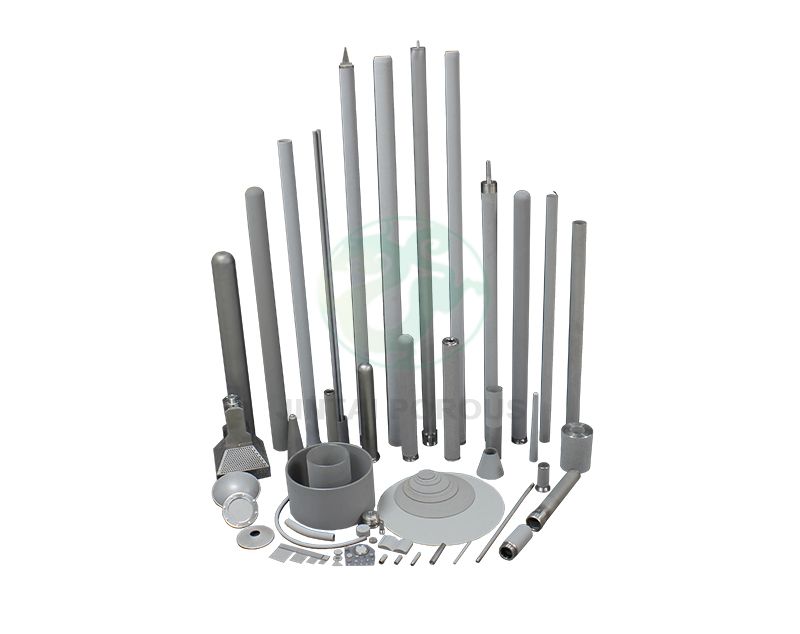
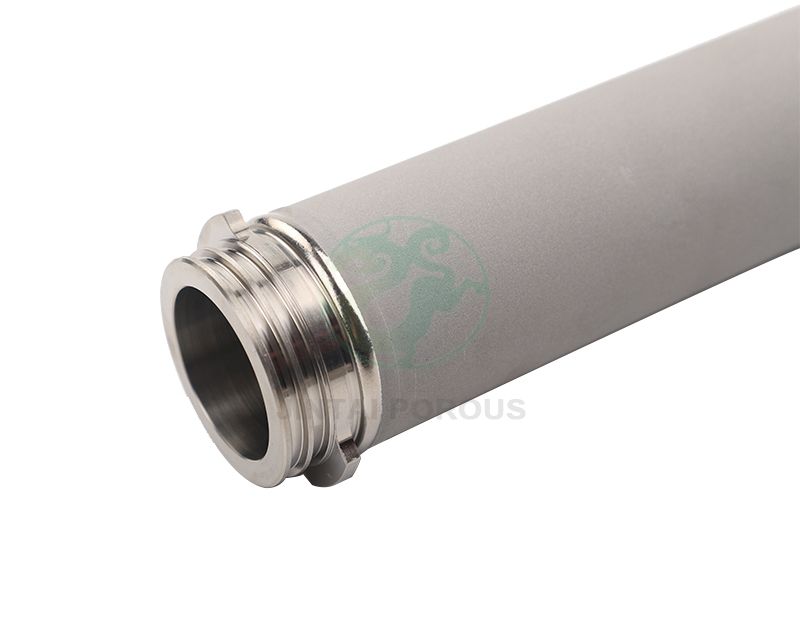
How Sparger Pore Size Affects Bubble Size is a critical question when you need higher oxygen transfer, more uniform gas distribution, or lower operating costs. At JINTAI, we recommend a simple four-step method: define the process target, select a suitable pore-size range, confirm operating pressure and flow, then validate bubble performance in the actual liquid. This approach helps engineers choose Sintered Porous Metal Spargers efficiently instead of relying on pore size alone.
A sparger introduces gas into a liquid through a porous surface. The gas forms bubbles when pressure inside the sparger exceeds the liquid-side pressure and the capillary resistance of the pores.
In general:
However, How Sparger Pore Size Affects Bubble Size is not a simple one-to-one relationship. A 10 μm pore does not always generate a 10 μm bubble. The final bubble diameter is also influenced by pore geometry, pore density, gas velocity, liquid properties, sparger orientation, and bubble coalescence.
For this reason, JINTAI evaluates the complete gas-liquid dispersion system rather than specifying a sparger only by nominal pore size.
A smaller pore creates a smaller gas outlet and typically requires a higher breakthrough pressure. When operating conditions are properly controlled, this can produce a larger number of fine bubbles.
Fine bubbles provide:
For example, a sintered stainless steel sparger with a nominal pore size between 2 and 10 μm may be suitable for fine gas dispersion in laboratory reactors, oxygenation systems, and selected fermentation applications.
Larger pores allow gas to pass with lower pressure loss. This can be advantageous for high-flow applications, but the resulting bubbles are often larger and more likely to coalesce.
Typical effects include:
A 20–50 μm porous metal sparger may be appropriate for stripping, coarse aeration, gas distribution, or applications where pressure drop is more important than maximum interfacial area.
The same JINTAI sparger can generate different bubble sizes under different conditions. Important variables include:
| Variable | Typical effect on bubble size |
|---|---|
| Smaller pore size | Usually finer initial bubbles |
| Higher gas flow rate | Often increases bubble diameter and coalescence |
| Higher liquid viscosity | Can delay bubble breakup and increase apparent size |
| Higher surface tension | Can produce more stable, larger bubbles |
| Surfactants or proteins | May stabilize smaller bubbles after formation |
| Higher liquid depth | Increases hydrostatic pressure and gas compression |
| Agitation | Can break bubbles into smaller sizes or promote coalescence |
| Poor wetting | Causes irregular gas release and uneven bubble distribution |
| Blocked pores | Raises local pressure and creates nonuniform flow |
This is why we use actual gas-flow and liquid-property data when selecting Sintered Porous Metal Spargers.
Before choosing pore size, identify what the process must accomplish.
Ask:
For oxygen transfer in a bioreactor, fine and stable bubbles are usually preferred. For high-volume nitrogen purging, a coarser pore structure may provide better throughput and lower energy consumption.
Use the following as an initial engineering guide, not as a guaranteed bubble-size chart:
| Nominal pore range | General dispersion behavior | Common application direction |
|---|---|---|
| 0.5–2 μm | Very fine dispersion, higher pressure demand | Specialized aeration and sterile gas distribution |
| 2–10 μm | Fine bubbles with good interfacial area | Fermentation, oxygenation, laboratory reactors |
| 10–20 μm | Balanced dispersion and pressure drop | General gas-liquid contacting |
| 20–50 μm | Coarser bubbles and higher gas capacity | Stripping, purging, coarse aeration |
| 50–100 μm | High throughput, low resistance | Gas distribution and non-critical mixing |
The actual bubble-size distribution may be several times larger than the effective pore diameter because bubbles expand after leaving the metal surface and may merge before rising through the liquid.
The gas pressure must overcome:
A simplified operating check is:
Pgas > Pliquid + ΔPsparger + ΔPsystem
If the pressure margin is too low, gas may pass through only a small portion of the sparger. This creates localized bubbling rather than uniform dispersion.
For small-pore Sintered Porous Metal Spargers, we recommend confirming pressure behavior at the actual operating temperature and liquid composition. JINTAI can assist with a test plan and normally provides an engineering response within 24 hours for standard configuration inquiries.
Pore size is only one part of sparger selection. The material must also withstand corrosion, temperature, pressure, and cleaning procedures.
Common JINTAI materials include:
For material verification, procurement specifications may reference ASTM A276 or ASTM A479 where applicable to stainless steel bar and pressure-related material requirements. Surface finish, weld quality, and cleaning validation should be specified separately because these standards do not by themselves define sparger bubble performance.
Reliable bubble performance requires repeatable pore structure. JINTAI controls production through powder preparation, compaction, sintering, machining, cleaning, and inspection.
Depending on the application, inspection may include:
ASTM F316 may be used as a reference for bubble-point-based pore characterization where the test method is applicable to the product design. ASTM E128 may also be considered for effective porosity evaluation. The selected test method should be agreed upon because nominal pore size, maximum pore size, mean-flow pore size, and effective pore size are different parameters.
JINTAI can provide inspection records according to project requirements, including 100% dimensional inspection for critical components and batch-based permeability verification.
Two spargers may have the same nominal pore rating but perform differently if they have different:
For example, a local area containing oversized pores can release more gas than the rest of the surface. The result is uneven bubble distribution, reduced mass-transfer efficiency, and possible foaming.
Fermentation systems often need high oxygen transfer without excessive shear or foaming. A fine-pore sparger can increase interfacial area, but excessive gas velocity may still produce large bubbles and foam.
We normally review:
For sterile processes, 316L stainless steel, controlled weld geometry, and validated cleaning procedures are often required.
Fine bubbles can improve oxygen utilization, but wastewater contains suspended solids, oils, and biological growth that may block small pores.
The engineering balance usually involves:
A slightly larger pore size may outperform a finer one over the equipment’s service life if it remains clean and distributes gas consistently.
Hydrogen dispersion depends on gas solubility, agitation, catalyst loading, pressure, and liquid viscosity. A fine porous metal sparger can improve initial distribution, but the reactor impeller and circulation pattern remain important.
For chemical service, confirm:
These applications often prioritize gas capacity and pressure efficiency. A medium or coarse pore structure may be more practical than an ultra-fine sparger.
The objective is usually to achieve:
This often occurs because of excessive gas flow, high liquid surface tension, or bubble coalescence.
Recommended actions:
Uneven bubbling may indicate nonuniform wetting, poor leveling, blocked pores, or insufficient pressure.
Recommended actions:
A rising pressure drop usually indicates pore fouling, liquid contamination, or process solids entering the porous structure.
Preventive measures include:
Fine bubbles can increase gas-liquid contact but may also stabilize foam, especially in biological liquids.
Possible solutions:
We recommend using the following tools during design and commissioning:
A practical validation program should compare at least three operating points, such as 50%, 75%, and 100% of the planned gas flow. Record inlet pressure, liquid depth, differential pressure, dissolved oxygen or mass-transfer performance, and visible bubble distribution at each point.
Before placing an order for Sintered Porous Metal Spargers, confirm the following:
If the design is critical, request a sample or pilot test. A short test can reveal whether the selected pore size provides the required dispersion without creating excessive pressure drop or foam.
The key answer to How Sparger Pore Size Affects Bubble Size is that smaller pores generally support finer bubbles, while larger pores usually provide greater gas capacity and lower pressure resistance. However, actual bubble performance depends on gas velocity, liquid properties, wetting, pressure, sparger geometry, and coalescence.
To make the correct choice:
JINTAI combines precision manufacturing, pore-structure control, dimensional accuracy to 0.01 mm, and application-focused engineering support to help customers select dependable Sintered Porous Metal Spargers. By treating pore size as part of a complete gas-dispersion design, we help businesses improve mass transfer, reduce energy waste, control maintenance costs, and achieve more stable production results.