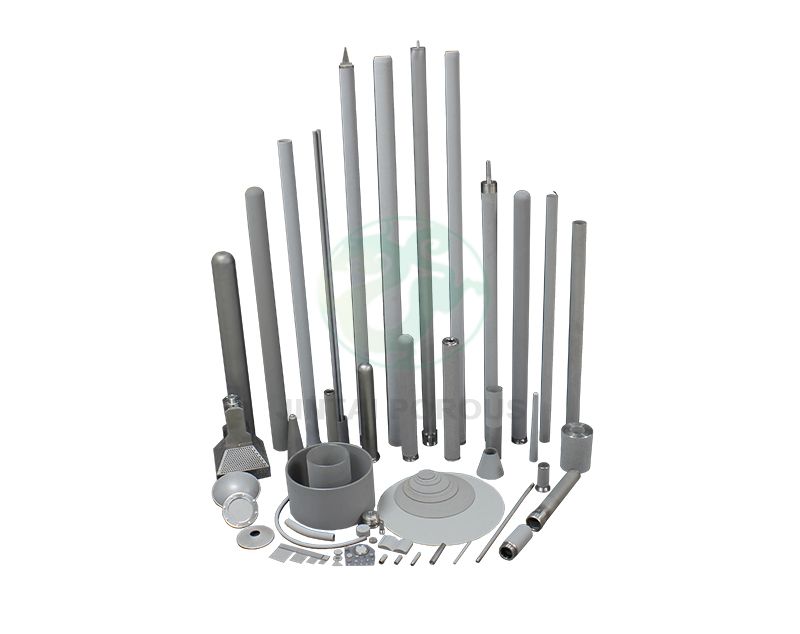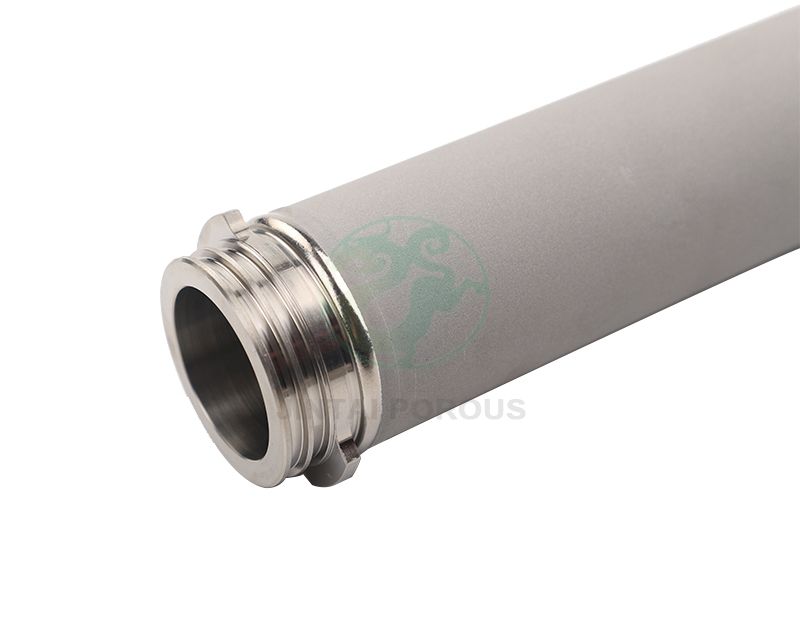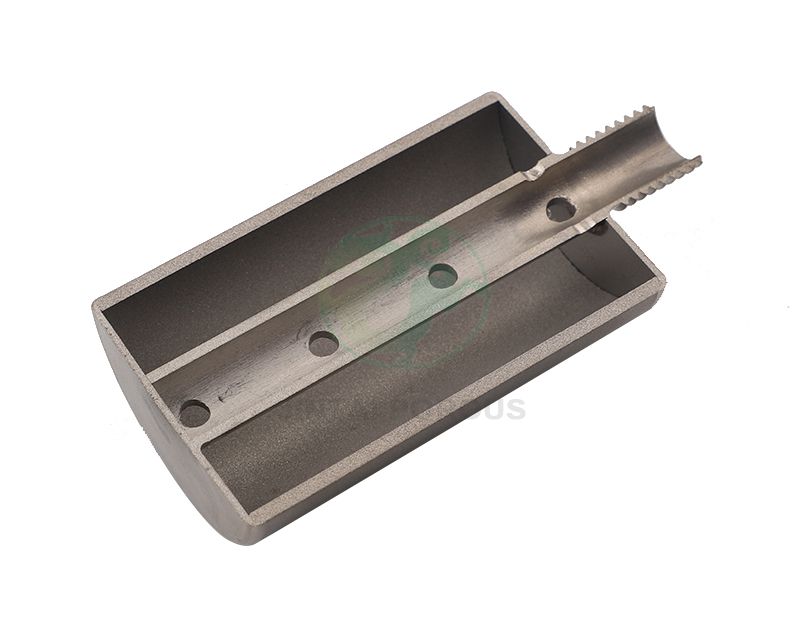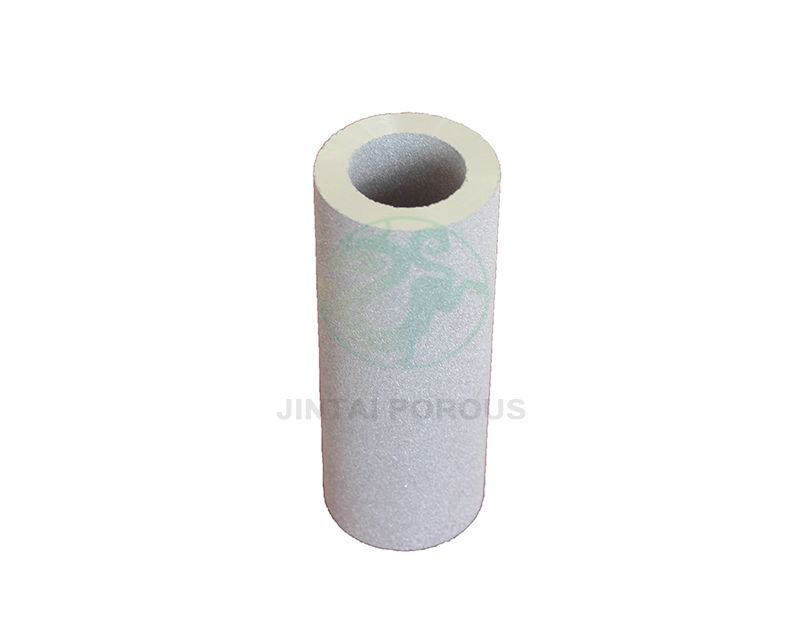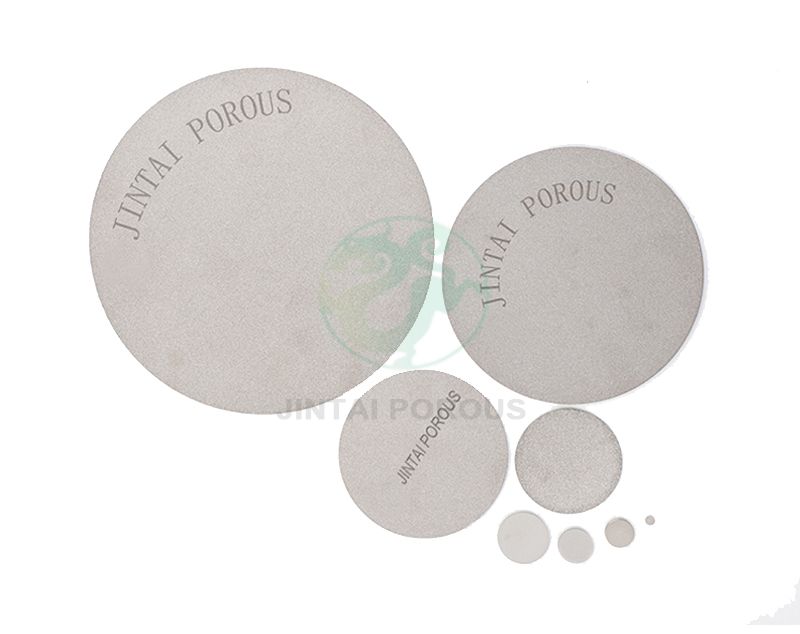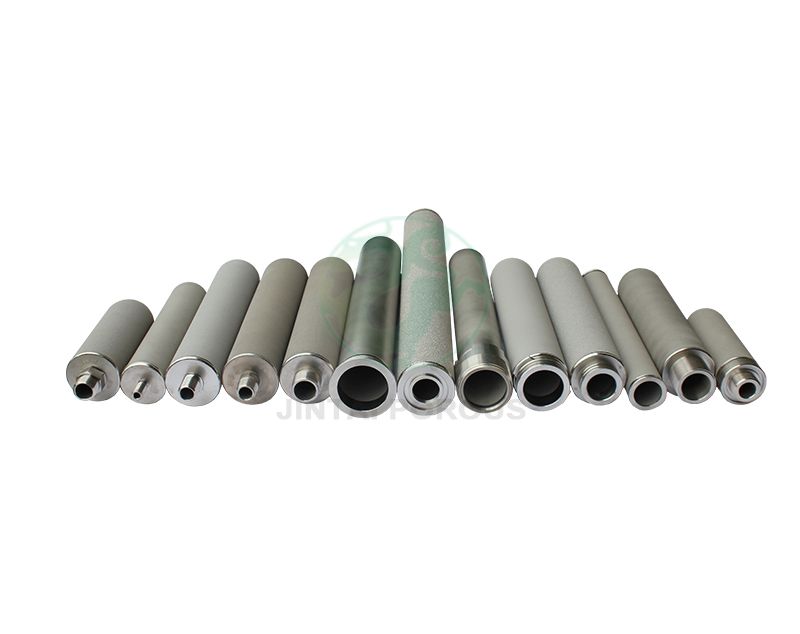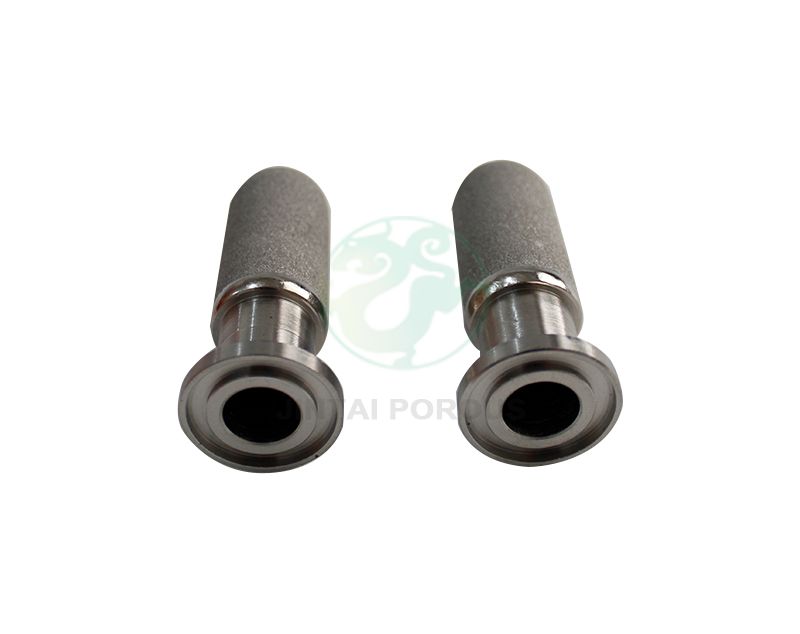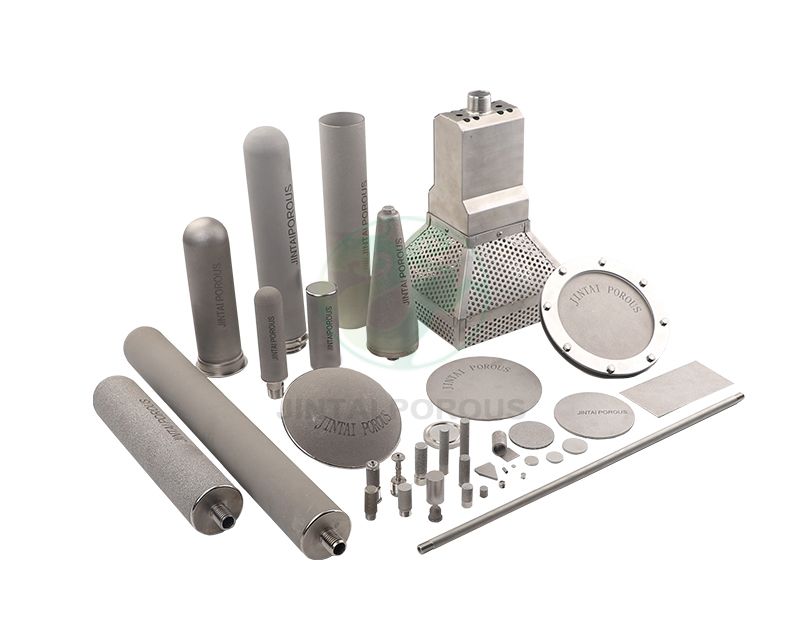

Industrial buyers need porous components that keep working under heat, corrosion, pressure, and repeated cleaning. Sintered porous nickel is a strong option when ordinary stainless steel or polymer media cannot meet the service conditions. Nickel foam is another useful form for gas diffusion, heat transfer, and electrode support.
Porous metal filters can also provide controlled flow, high mechanical strength, and long service life in a small part. This guide explains material choices, pore data, production steps, and application limits so engineers and distributors can choose nickel-based porous metal components with less risk.
JINTAI manufactures custom sintered porous metal parts for overseas industrial customers. The final design should always match the actual temperature, pressure, fluid chemistry, flow rate, and cleaning method.


Nickel-based porous components combine a metal structure with a controlled network of open pores. This network allows gas or liquid to pass through while the solid metal skeleton supports the component. The result is a part that can filter, diffuse, vent, wick, damp, or distribute a fluid.

Nickel alloys can work at temperatures where many polymer filters lose strength or deform. Depending on the alloy, atmosphere, load, and exposure time, nickel-based parts may support continuous service from about 300 C to more than 900 C. The exact limit must be confirmed by testing and application review.
1. Why Nickel-Based Porous Metal Components Solve Difficult Service Problems
Nickel and nickel alloys are often selected for alkaline solutions, hot gases, chemical processing, battery production, and marine environments. Alloy selection is important. Pure nickel, nickel-chromium alloys, nickel-copper alloys, and nickel-iron-chromium alloys do not have the same resistance to acids, chlorides, oxidation, or reducing gases.
High temperature performance
A sintered porous metal component does not need a fragile fiber layer to control flow. Its pore size, thickness, density, and material can be designed together. Typical open porosity may range from 20% to 60%, while the practical pressure drop depends on pore size, thickness, viscosity, and flow speed.
Resistance to aggressive media
Choosing the correct nickel grade is more important than choosing a high nickel percentage alone. The correct material must match the fluid, temperature, pressure, atmosphere, and cleaning cycle.
| Material type | Main advantages | Typical applications | Important limits |
|---|---|---|---|
| Commercially pure nickel | Good alkaline resistance, thermal stability, and electrical conductivity | Battery parts, chemical filters, gas diffusion parts | Lower strength than some nickel superalloys at high temperature |
| Nickel-chromium alloy | Strong oxidation and heat resistance | Hot gas filters, burner systems, furnace parts | Higher cost and more difficult powder processing |
| Nickel-copper alloy | Good resistance in selected marine and chemical conditions | Fluid control, seawater-related equipment, chemical equipment | Not suitable for every acid or high-temperature atmosphere |
| Nickel-iron-chromium alloy | High-temperature strength and oxidation resistance | Energy equipment, heat treatment, process gas systems | Requires careful sintering and dimensional control |
| Nickel foam | Low weight, high surface area, good electrical and gas flow performance | Electrodes, battery supports, catalysts, heat exchangers | Often needs a protective coating or alloy selection for corrosive media |
For a filter used in hot alkaline liquid, pure nickel may be a practical starting point. For an oxidizing gas above 700 C, a nickel-chromium alloy may provide better protection. For an electrode or gas diffusion layer, nickel foam may offer more active surface area than a dense machined part.
Strength with controlled permeability
Many purchasing problems come from incomplete specifications. A drawing that only states "porous nickel filter" is not enough for stable production. Buyers should request a complete technical data sheet before approving a sample.
2. The Main Nickel Materials and Their Best Uses
Nominal pore size describes the approximate opening range. It does not always equal the absolute particle retention rating. A porous metal filter may be specified at 5, 10, 20, 40, or 100 microns, but the real performance depends on pore distribution and test method.
Request these details: nominal pore size, absolute retention if required, bubble point, pore size distribution, and test fluid.
3. The Key Technical Data Buyers Should Request
Permeability shows how easily a fluid passes through the material. Pressure drop is the difference between inlet and outlet pressure at a stated flow rate. These values must be measured using the same gas or liquid planned for production service.
A thicker part usually provides better particle capture but causes higher pressure drop. A larger pore size usually lowers pressure drop but may reduce filtration efficiency. JINTAI can adjust thickness, density, pore size, and shape to balance these requirements.
Pore size and filtration rating
Important values include tensile strength, compressive strength, burst pressure, flatness, wall thickness, diameter, surface roughness, and dimensional tolerance. A porous component may be strong in compression but less suitable for unsupported bending.
Permeability and pressure drop
For chemical, medical, battery, and semiconductor equipment, buyers may need low oil residue, low loose powder, controlled washing, and special packaging. If the part must be welded, brazed, or installed in a metal housing, the joint area should be defined on the drawing.
Mechanical and dimensional data
Sintering joins metal powder particles through controlled heat without melting the complete part. This process creates connected pores and allows the manufacturer to produce tubes, discs, plates, cups, rings, nozzles, sleeves, and custom shapes.
Cleanliness and joining requirements
Application review - Confirm fluid, temperature, pressure, flow rate, filtration target, and cleaning method.
Material selection - Select pure nickel or a suitable nickel alloy based on corrosion, heat, and electrical needs.
Powder preparation - Control powder chemistry, particle size, shape, and cleanliness.
Tooling and forming - Press, roll, mold, or shape the powder according to the component design.
Debinding when required - Remove forming aids under a controlled atmosphere.
Sintering - Heat the compact in a controlled furnace to bond particles and create stable pores.
Secondary processing - Use sizing, machining, welding, coating, or surface treatment where needed.
Inspection and packing - Check dimensions, permeability, appearance, strength, cleanliness, and packaging condition.
4. How JINTAI Produces Sintered Porous Nickel Parts
Step-by-step production flow
Sintering temperature, time, atmosphere, powder size, and compaction pressure affect final porosity. A small change in density can change flow performance. For this reason, a reliable supplier should control the process with production records and test samples, not only a final visual inspection.
JINTAI can develop prototypes before mass production. This helps confirm filtration, pressure drop, fit, and cleaning performance before a customer commits to a large order.
Why process control matters
| Industrial application | Recommended component form | Main design target | Common buyer concern |
|---|---|---|---|
| Hot gas filtration | Sintered nickel or nickel-chromium filter tube | Heat resistance, particle retention, low maintenance | Oxidation and thermal cycling |
| Battery manufacturing | Nickel foam, porous electrode support, porous plate | Electrical conductivity and high active surface area | Uniform pore structure and low contamination |
| Chemical processing | Porous nickel disc, candle filter, or cartridge | Corrosion resistance and cleanability | Media compatibility and sealing |
| Gas diffusion | Nickel foam or thin sintered porous sheet | Even gas distribution and controlled pressure drop | Flow uniformity across the full area |
| Fluid metering | Porous nickel restrictor or flow controller | Stable flow at a defined pressure range | Clogging and batch-to-batch variation |
| Noise and vibration control | Porous metal muffler or vent component | Gas release with sound reduction | Back pressure and mechanical connection |
5. Application Comparison: Which Porous Nickel Form Fits the Job?
6. Common Design Mistakes That Cause Early Failure
Pore size alone does not define filter performance. Two products with the same nominal pore size can have different pressure drops, bubble points, and particle retention. Always specify the test method and the required flow condition.
Using pore size as the only specification
Nickel-based metal and the housing may expand at different rates. A tight fit at room temperature can become too loose or too stressed at operating temperature. The drawing should include the operating temperature and the materials of connected parts.
Ignoring thermal expansion
Nickel is not automatically resistant to every chemical. Chloride concentration, acid strength, dissolved oxygen, flow speed, and temperature can change corrosion behavior. Provide the complete fluid composition to the manufacturer.
Selecting an alloy without checking the fluid
Deep pores can hold particles, oil, or process residue. If the part will be backwashed, ultrasonically cleaned, or chemically cleaned, the cleaning process should be tested during product development.
Designing a part that cannot be cleaned
A flat disc or small coupon can show whether the material has the required flow, filtration, and chemical performance. Testing a simple sample first can reduce tooling cost and shorten the development cycle.
Ordering a complex shape before testing a flat sample
International buyers need more than a competitive unit price. They need stable quality, clear communication, export packing, repeatable production, and technical support after delivery.
Use this supplier checklist:
- Can the supplier provide material composition and pore data?
- Can the supplier produce both prototypes and repeat orders?
- Are permeability, dimensions, and appearance inspected?
- Can the supplier support custom tubes, discs, plates, and assemblies?
- Can the supplier provide cleaning and packaging suitable for the application?
- Does the supplier understand international drawings, tolerances, and shipping requirements?
JINTAI supports custom porous metal component development for distributors, equipment manufacturers, and industrial users. Customers can send a drawing, sample, or application description. The technical review can then define material, pore rating, dimensions, tolerance, test plan, and quantity.
7. How to Select a Reliable Overseas Supplier
8. Buyer Questions About Nickel Porous Metal Components
It is a part made by compacting nickel powder and heating it in a controlled atmosphere. The particles bond together while connected pores remain inside the structure. The part can be used for filtration, diffusion, venting, flow control, or support.
What is a sintered porous nickel component?
No. Nickel foam is usually an open three-dimensional network with a high surface area and low weight. A sintered nickel filter is normally made from metal powder and is designed for controlled particle retention and pressure drop. Some applications can use either form, but their performance is not identical.
Is nickel foam the same as a sintered nickel filter?
Yes. Common custom forms include discs, tubes, cylinders, plates, rings, cups, and porous inserts. Shape, thickness, pore size, density, and connection features should be reviewed together because each change can affect production and performance.
Can porous nickel parts be made to a custom shape?
Service life depends on corrosion, particle loading, temperature cycling, pressure, vibration, and cleaning. A component may last for months or many years. The best estimate comes from an application test using the actual fluid and operating conditions.
How long do nickel-based porous components last?
Send the component drawing or sample, material preference, pore rating, flow rate, pressure, temperature, fluid composition, connection method, annual quantity, inspection needs, and destination country. Complete data helps JINTAI provide a more accurate technical and commercial proposal.
What information should I send for a quotation?
Nickel-based porous metal components are valuable when an application needs controlled flow, high temperature stability, chemical resistance, electrical conductivity, or long mechanical life. The best result does not come from choosing the most expensive alloy. It comes from matching material, pore structure, thickness, density, geometry, and testing to the actual service conditions.
For demanding industrial applications, specify more than "nickel filter." Define the pore rating, pressure drop, temperature, fluid, strength, cleaning method, and dimensional tolerance. With early sample testing and controlled production, JINTAI can help overseas buyers and distributors reduce failure risk and build a repeatable supply program.