
September 28, 2026
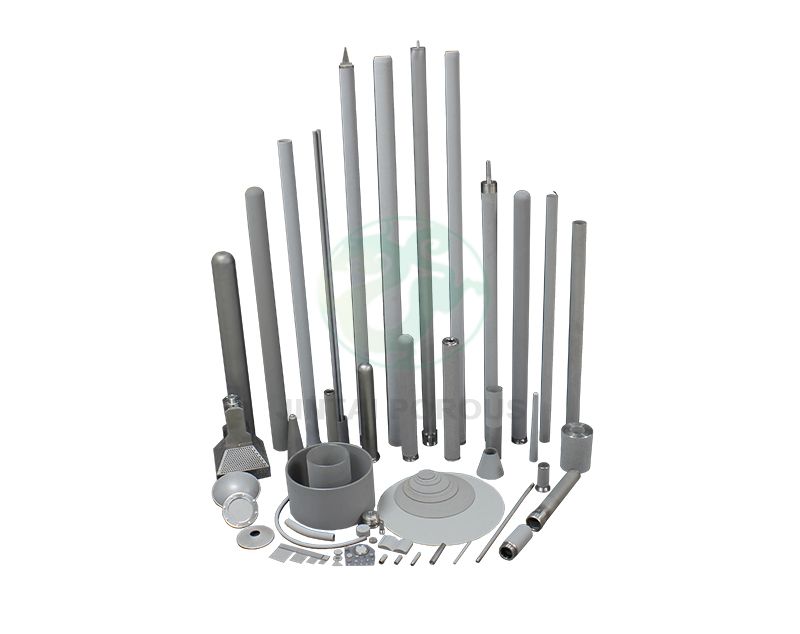
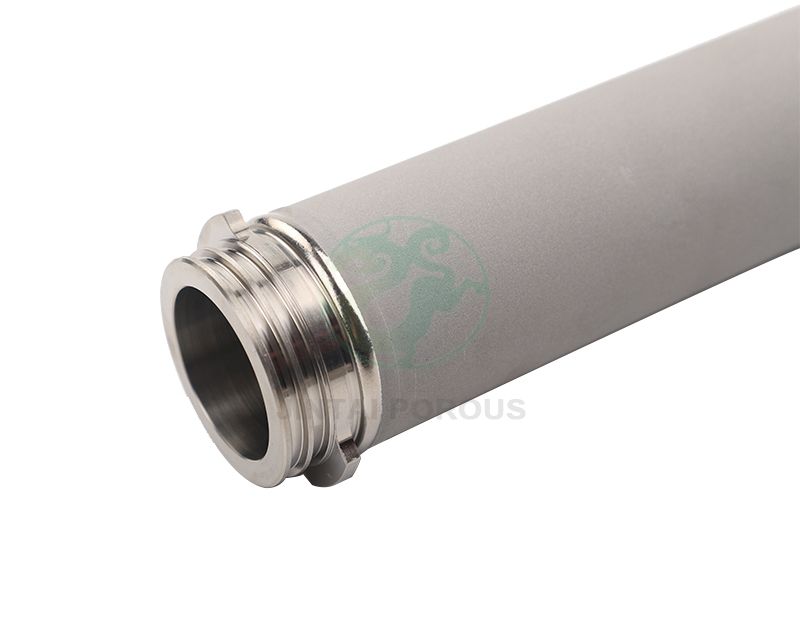
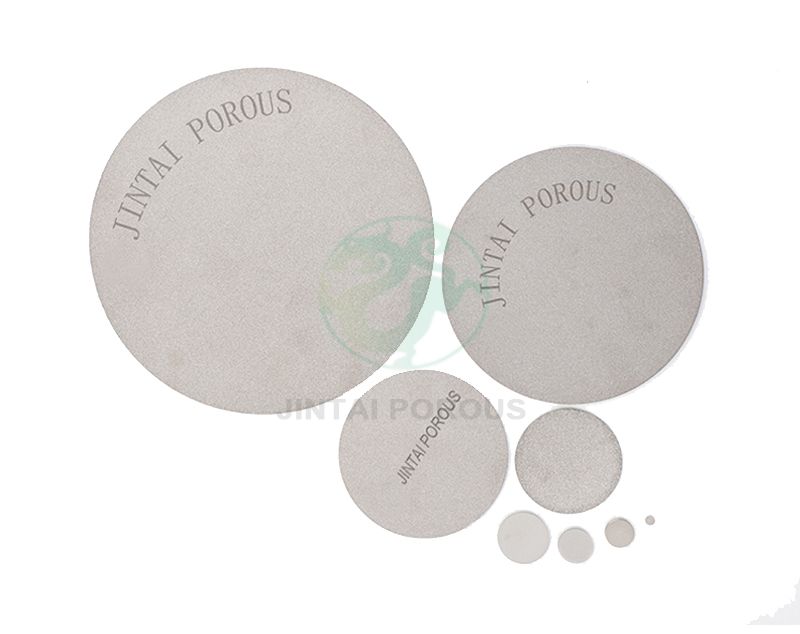
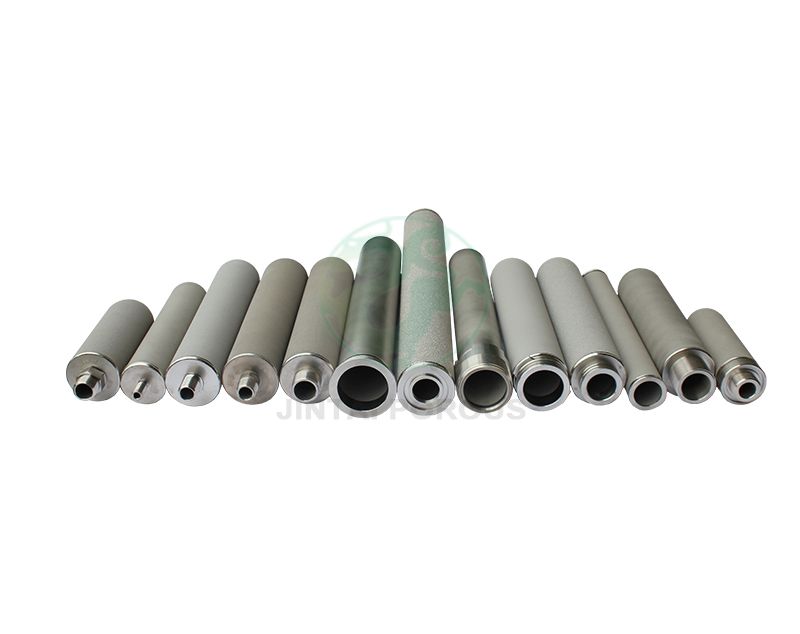
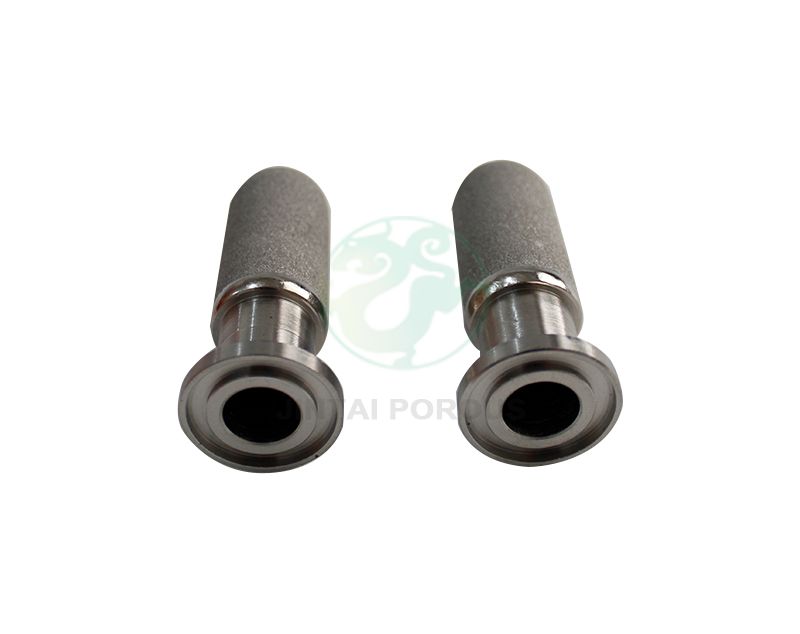
Choosing between surface filtration vs depth filtration in porous metal filter elements affects pressure drop, service life, cleaning frequency, and product purity. A sintered porous metal filter element for high-temperature gas usually behaves differently from a stainless steel porous filter element for liquid particle removal. The decision should be based on pore size, dirt-holding capacity, and pressure drop, while material selection, sintering, and bubble point testing determine whether the specified performance is repeatable. This comparison explains how each structure works, where it fails, and how to select a reliable element such as a JINTAI porous metal filter.

In a process plant, filter failure rarely begins with a dramatic rupture. It often starts with a gradual increase in differential pressure, an unexpected change in filtrate clarity, or a cleaning cycle that no longer restores the original flow rate. Engineers comparing a surface filter element and a depth filter element are therefore solving more than a particle-removal problem. They are balancing contaminant loading, fluid viscosity, temperature, cleanability, pressure rating, and total operating cost.
A surface filter captures particles mainly at or near the upstream face. Its filtration behavior is comparable to a controlled sieve: particles larger than the effective opening remain on the surface, where they form a cake. A depth filter distributes particle capture through interconnected pores. Particles can be retained by interception, inertial impaction, diffusion, and tortuous-path effects at several depths within the porous structure.
For a sintered metal element, the difference is influenced by pore-size distribution rather than nominal pore size alone. Two elements both labeled “5 microns” may show different particle retention because one has a narrow distribution and the other contains larger connecting pores. The practical result is that laboratory ratings should be reviewed together with bubble-point pressure, permeability, mean pore diameter, and absolute-retention test data.
Surface filtration is normally selected when the contaminant load is moderate, the particles are relatively large or defined, and the element must be cleaned repeatedly. In a sintered 316L stainless steel element, the upstream openings provide the primary retention zone. Once solids accumulate, the filter cake can become the dominant filtration layer.
This mechanism offers three practical advantages:
Surface filtration can also create a rapid pressure-drop increase. If a process contains a high concentration of deformable particles, oil-coated solids, polymer gel, or fibrous material, the cake may blind the face before the available internal pore volume is used. In that situation, the element may have excellent initial clarity but a short operating cycle.
Depth filtration uses the full thickness of the porous medium. A particle may enter the element, change direction repeatedly, and become trapped against a pore wall or at a constriction farther inside the structure. This can increase dirt-holding capacity when the contaminant size distribution is broad.
Depth filtration is often useful for:
The trade-off is cleaning difficulty. Contaminants retained inside the porous network may not be removed completely by a short reverse-flow pulse. A depth element can therefore show acceptable initial permeability while retaining a residual pressure drop after cleaning. In applications with frequent regeneration, this residual loading should be measured over several cycles rather than inferred from the first cleaning test.
| Parameter | Surface Filtration | Depth Filtration | Operational Meaning |
|---|---|---|---|
| Primary retention location | Upstream face or thin surface layer | Throughout the porous thickness | Determines how contamination is distributed and removed |
| Typical particle behavior | Best for defined, relatively uniform particles | Better for mixed-size and irregular particles | Particle shape and size distribution matter as much as the rating |
| Nominal pore range | Commonly 1–100 µm, depending on design | Commonly 1–100 µm, with broader internal pathways | Nominal pore size alone does not establish absolute retention |
| Initial pressure drop | Often lower when the surface is open and clean | May be higher because fluid travels through more internal structure | Measure clean pressure drop at the actual flow rate and viscosity |
| Pressure-drop progression | Can rise sharply after cake formation | Usually rises more gradually during loading | System control limits should match the loading curve |
| Dirt-holding capacity | Moderate; depends heavily on cake permeability | Often higher for broad contaminant distributions | Test with the real contaminant rather than standardized dust only |
| Cleaning efficiency | Typically higher for backwash and reverse flow | May be lower because solids remain inside the matrix | Validate recovery after at least three cleaning cycles |
| Filtrate quality | Highly predictable when pore distribution is narrow | Strong retention through depth but more dependent on loading history | Use particle-count testing and bubble-point verification |
| Best use case | Reusable prefilters, catalyst protection, defined particle removal | Mixed-contaminant streams and higher solids loading | Choose according to contamination behavior, not marketing terminology |
For context, a clean metal filter operating at a fixed flow may show a pressure drop of approximately 0.02–0.20 bar, depending on geometry, permeability, fluid viscosity, and filter area. A loaded element can exceed 1.0–2.0 bar before the process control system triggers replacement or cleaning. These values are illustrative operating ranges, not universal specifications; the manufacturer should provide a flow-versus-pressure curve for the exact element.
For hot gas, a sintered stainless steel or nickel-alloy element is often favored because it tolerates temperatures and pressure differentials that polymeric media cannot withstand. Surface filtration is suitable when the gas contains a predictable dust load and the plant can use pulse-jet cleaning. The dust cake can act as a secondary filtration layer, improving fine-particle removal after the initial conditioning period.
Depth filtration is more appropriate when dust concentration fluctuates or when particles penetrate easily into a surface cake. However, a deep structure may require stronger pulse energy, longer cleaning time, or periodic thermal treatment. The specification should include maximum operating temperature, thermal cycling conditions, gas composition, allowable oxidation, and cleanability testing.
Hydraulic systems often contain wear particles, fibers, varnish precursors, and occasional metallic debris. A surface-oriented element can provide consistent control of larger particles and can be cleaned when the contamination is mainly loose solids. A depth-oriented element may hold more mixed debris, but it can also retain varnish-like material that is difficult to remove.
For a 10–25 µm hydraulic application, the correct choice should be based on ISO 16889-style multipass testing or an equivalent particle-count method, not only on a product label. A filter that removes 99% of test particles in one size band may perform differently when exposed to real oil containing soft contaminants.
Surface filtration is generally easier to validate in water and low-viscosity chemical service because the retention plane is clear and the element can often be backwashed. Depth filtration may be selected when the feed contains a wide range of particle sizes, but chemical compatibility must be checked carefully.
316L stainless steel is widely used for many aqueous and mildly corrosive services, while Hastelloy, titanium, or other alloys may be required for chlorides, strong acids, or high-temperature alkaline solutions. The correct material depends on concentration, temperature, dissolved oxygen, crevice conditions, and exposure time. A material that survives a short immersion test may still fail after months of cyclic operation.
Purchase price alone can produce the wrong decision. A surface filter may cost more per element because it uses a controlled pore structure, but it can deliver lower lifetime cost when it survives repeated backwashing. A depth filter may offer a lower initial quotation while consuming more replacement elements if internal contamination cannot be removed.
| Cost Item | Surface-Oriented Element | Depth-Oriented Element |
|---|---|---|
| Initial element cost | Often moderate to high for narrow pore distribution | Often moderate, depending on thickness and alloy |
| Cleaning equipment | May require backwash, reverse-flow, or pulse cleaning | May require stronger cleaning or periodic replacement |
| Replacement frequency | Potentially lower when cake removal is effective | Potentially higher after irreversible internal loading |
| Downtime exposure | Lower if cleaning can be performed online or quickly offline | Higher if residual pressure drop requires changeout |
| Best economic condition | High cleaning frequency and stable particle characteristics | High solids loading and infrequent replacement intervals |
A simple total-cost model is:
Annual filtration cost = element purchases + labor + cleaning utilities + disposal + production loss during downtime.
For example, replacing a $180 porous metal element every four weeks costs $2,340 per year before labor and downtime. If a reusable surface element priced at $420 lasts 18 months with cleaning, its annualized element cost is approximately $280. The reusable option is not automatically better; it must maintain acceptable particle retention and recover at least 85–90% of its original permeability after the planned cleaning cycle.
In one reported industrial operating scenario, a chemical-processing team used a sintered metal element upstream of a catalyst bed. The original surface-oriented design produced clear gas but reached the plant’s differential-pressure alarm after approximately 11 days because the feed contained both fine carbon dust and larger agglomerates. The team changed the element geometry and increased the effective filtration area from approximately 0.35 m² to 0.62 m² while retaining a 316L construction.
After the change, the initial pressure drop fell from about 0.31 bar to 0.18 bar at the same gas flow. The first cleaning interval extended to 19 days, and the element retained 92% of its initial permeability after three pulse-cleaning cycles. The result was not caused by “better filtration” in a general sense; the improvement came from a larger area, a more suitable loading profile, and a cleaning pulse matched to the cake structure.
This type of case should not be copied without testing. Gas velocity, dust chemistry, temperature, pulse pressure, and element length can change the result substantially. A supplier should be asked to reproduce the operating conditions in a pilot test whenever the filter protects an expensive catalyst, membrane, compressor, or sterile process.
Industrial buyers who evaluate JINTAI elements usually focus on measurable points rather than appearance: dimensional consistency, weld quality, permeability variation, bubble-point results, and cleaning recovery. A useful incoming inspection plan can sample the outside diameter, length, connection dimensions, pressure rating, and air permeability of each production batch.
Positive feedback is meaningful when it includes operating data such as “pressure drop remained below 0.6 bar for 30 days” or “permeability recovered to 88% after five backwash cycles.” Comments such as “the filter is excellent” are not enough to compare suppliers. Buyers should request the test fluid, temperature, flow rate, particle concentration, and measurement method behind every performance claim.
This is the strongest option when the process has a defined particle size, frequent backwashing, and a strict need for predictable retention. It is particularly suitable for reusable gas filters, catalyst protection, and liquid prefiltration.
This is appropriate when contaminants vary widely in size and a gradual pressure increase is more valuable than rapid cake formation. It is less suitable when every cleaning cycle must restore near-new permeability.
A graded porous metal element can combine a more open upstream region with finer downstream pores. This arrangement distributes loading while preserving a defined final retention zone. It may cost more to manufacture, but it can reduce surface blinding without sacrificing final filtrate quality.
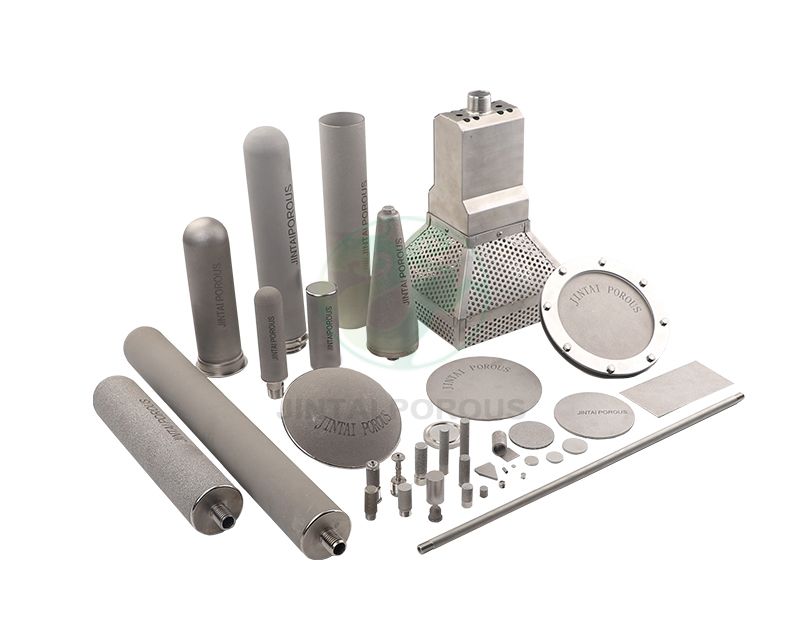
JINTAI can be considered when the application requires custom diameter, length, flange, threaded connection, support structure, alloy, pore rating, or cleaning method. The advantage of customization should be judged through test data: pressure-drop curves, bubble-point values, particle-retention results, weld inspection, and repeated cleaning performance.
Do not select a filter solely because its advertised pore size matches the target particle size. Effective filtration depends on pore-size distribution, surface loading, internal tortuosity, fluid viscosity, and the relationship between contaminant size and pore constriction. A pilot test using the actual process fluid can prevent an expensive full-scale changeout.
Surface filtration is suitable for users who need defined retention, visible cake loading, repeatable backwashing, and stable particle characteristics. It is less suitable for sticky, gelatinous, fibrous, or rapidly agglomerating contaminants that blind the upstream face.
Depth filtration is suitable for users handling mixed-size particles, variable solids loading, or contaminants that would form an unstable surface cake. It is less suitable for processes requiring near-complete permeability recovery after every cleaning cycle.
A hybrid or graded design is worth evaluating when the process needs both high dirt-holding capacity and controlled final retention. JINTAI should be shortlisted when its test documentation matches the application, not simply because of brand familiarity. Ask for a sample element, run it at the intended flow and temperature, and compare initial pressure drop, particle removal, loading time, and post-cleaning recovery.
For a final decision on surface filtration vs depth filtration in porous metal filter elements, compare the sintered porous metal filter element for high-temperature gas and the stainless steel porous filter element for liquid particle removal against actual pore size, dirt-holding capacity, and pressure drop data. Confirm the alloy, sintering profile, and bubble point before purchase, then request a JINTAI sample or application review to validate the result in your own process.