
Porous metal components help control gases, liquids, and particles in chemical processing systems. Sintered porous metal, chemical filtration, and corrosion-resistant alloys are three key solutions for equipment exposed to acids, alkalis, solvents, and high temperatures. These components can provide stable flow and reliable filtration when polymer filters fail. The correct material depends on the chemical concentration, temperature, pressure, and contact time. Common options include stainless steel, nickel alloys, titanium, and bronze. JINTAI designs and manufactures porous metal parts for overseas buyers and industrial distributors.
The short answer is simple: select the alloy before selecting the pore size. A porous component with the wrong alloy may crack, swell, lose strength, or contaminate the process. A properly designed part can work for several years in demanding service, while an unsuitable material may fail within weeks or months.


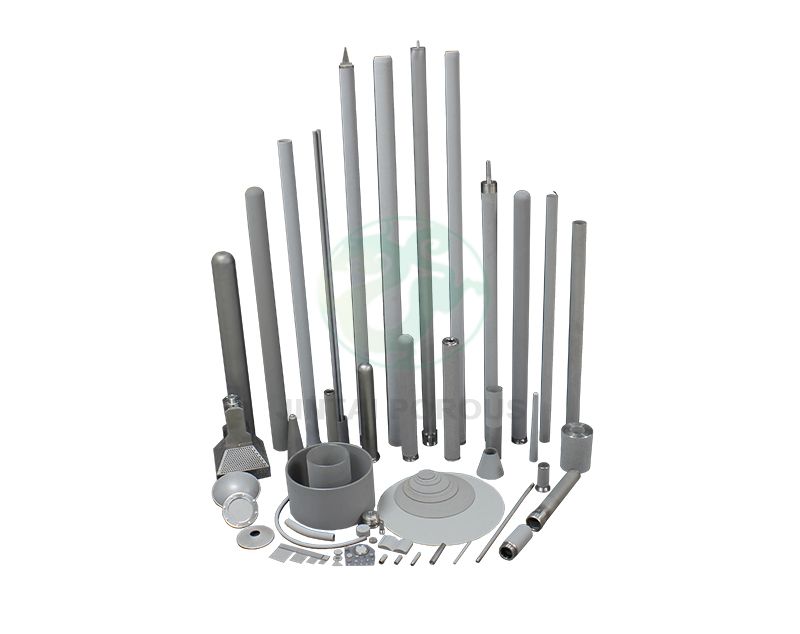
Porous metal components are parts made from metal powder or metal fibers. The material is formed and sintered, which joins the particles without fully melting them. Small connected pores remain inside the structure. These pores allow gas or liquid to pass through while retaining particles, creating bubbles, equalizing pressure, or controlling fluid flow.
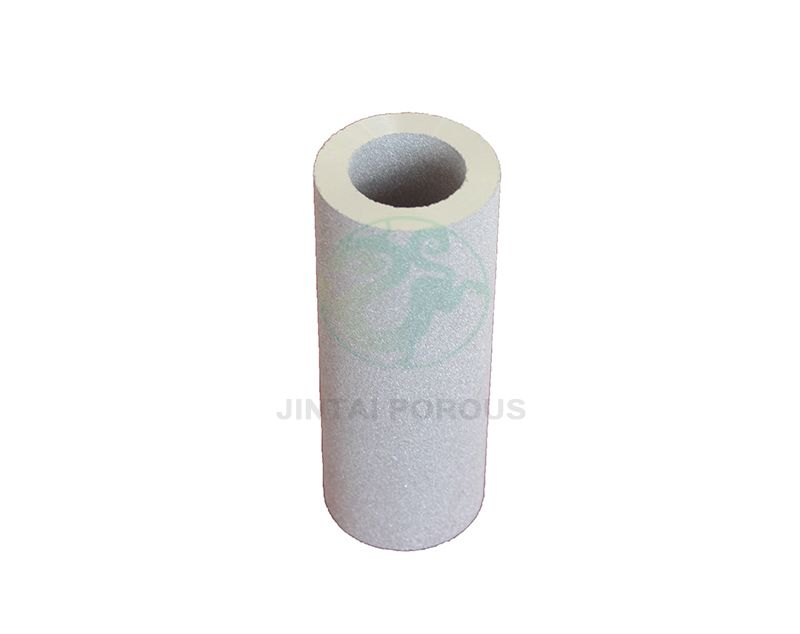
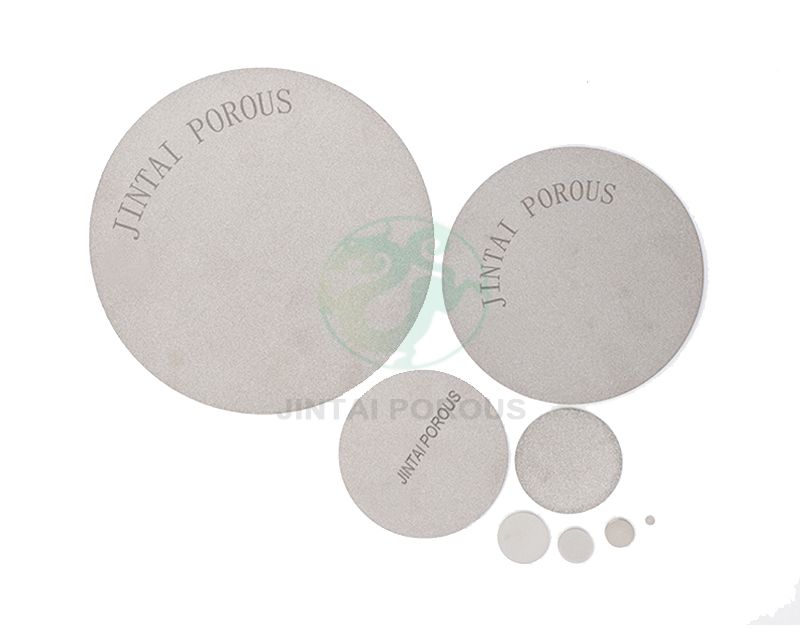
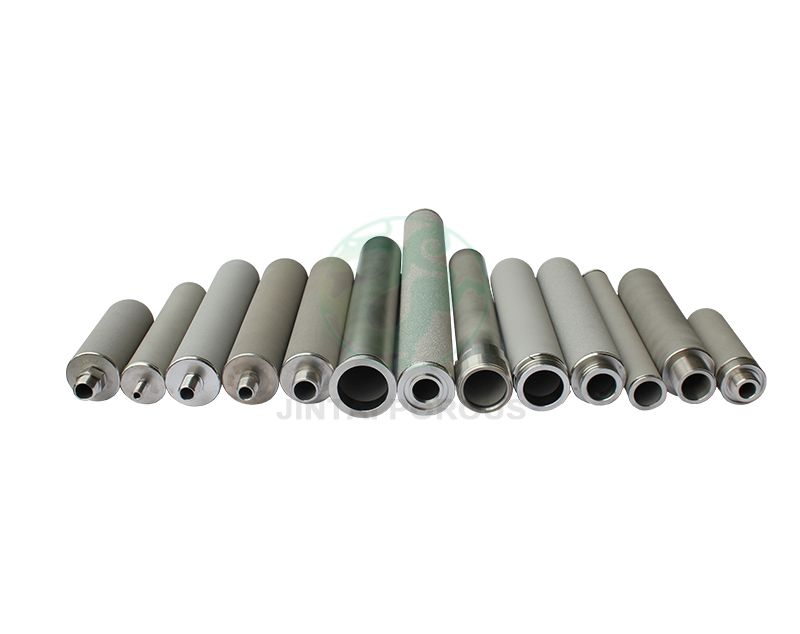
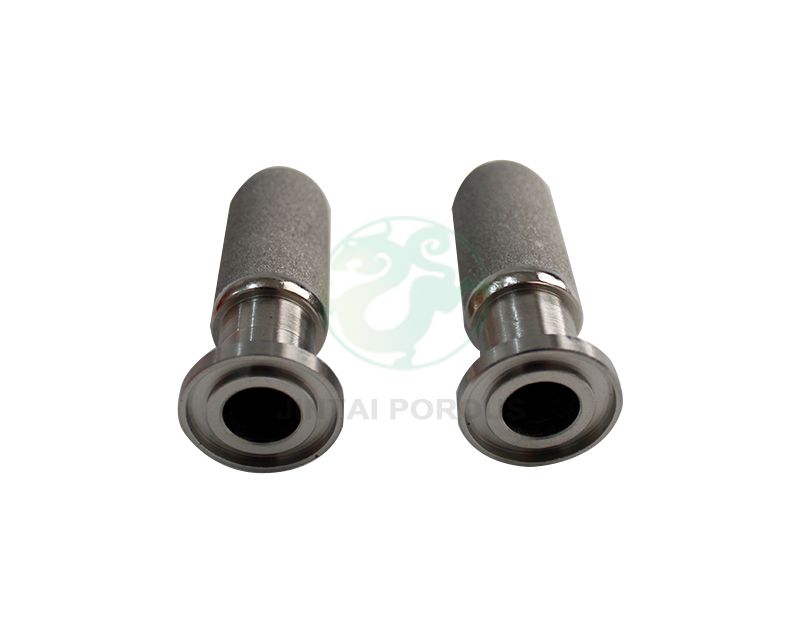
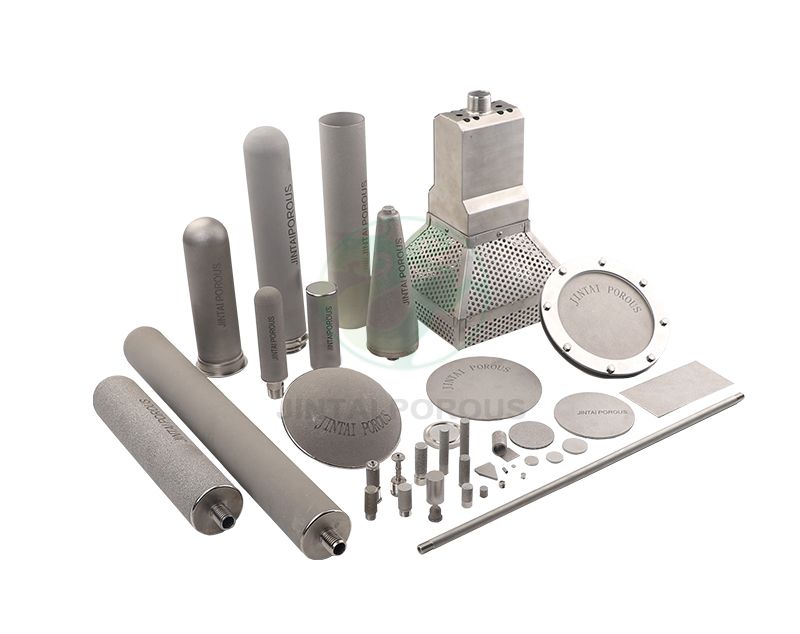
Typical products include porous metal filters, spargers, vent plugs, flame arrestors, flow restrictors, silencers, and diffusion plates. Their shape may be a disc, tube, cup, plate, ring, or custom assembly. Sintered construction gives the part high mechanical strength and good dimensional stability.
1. What Are Porous Metal Components?
The pore size is usually measured in microns. A smaller pore rating provides finer filtration but creates a higher pressure drop. A larger pore rating allows more flow but retains larger particles only. Open porosity, permeability, thickness, and surface area must be considered together.
| Design factor | What it controls | Typical design question |
|---|---|---|
| Pore size | Particle retention and bubble size | What is the smallest particle or bubble required? |
| Thickness | Strength, capacity, and pressure drop | Can the part support the operating pressure? |
| Alloy | Chemical resistance and service life | Which chemicals contact the part? |
| Surface finish | Cleanability and contamination control | Will the component be washed or sterilized? |
How the pore structure works
Corrosion is a chemical or electrochemical reaction between a metal and its environment. Acids can remove protective surface layers. Chloride ions can cause pitting and stress corrosion cracking. Strong alkalis can attack some stainless steels and aluminum. High temperature often speeds up corrosion and reduces mechanical strength.
The risk is not determined by the chemical name alone. Concentration, temperature, pressure, oxygen level, flow speed, impurities, and cleaning chemicals all affect the result. For example, a stainless steel filter may perform well in one concentration of acid but fail in a hotter or more concentrated solution.
2. Why Corrosive Chemicals Cause Filter Failure
- Filters corrode before the planned maintenance date.
- Pore openings change because the metal surface is attacked.
- Metal particles enter the production fluid.
- Pressure drop increases after chemical exposure.
- Welds or joints fail before the filter media.
- Replacement parts have inconsistent dimensions or flow rates.
A strong specification should therefore include the full chemical service condition, not only the word "corrosive." This information helps JINTAI recommend a practical alloy and manufacturing process.
Common pain points reported by industrial buyers
No metal is resistant to every chemical. The best material is the one that matches the actual operating condition and budget. The following comparison provides a starting point for selection. Final approval should be based on chemical compatibility testing and the complete process data.
| Material | Main strengths | Typical chemical service | Important limits |
|---|---|---|---|
| 316L stainless steel | Good corrosion resistance, weldability, and availability | Water treatment, mild acids, many solvents, food and pharmaceutical systems | Can suffer from chloride pitting and some strong acids |
| Nickel-based alloy | High resistance to acids, chlorides, and high-temperature service | Strong chemical processing and aggressive gas treatment | Higher material cost and more demanding production |
| Titanium | Excellent resistance to many chlorides and oxidizing media | Seawater, chlorine-related systems, and selected chemical processes | Higher cost and limited suitability for some reducing acids |
| Bronze | Good machinability and useful wear resistance | Air, water, oil, and less aggressive industrial fluids | Not suitable for many acids, ammonia compounds, or high chloride service |
3. Which Metals Resist Corrosive Chemical Environments?
316L is a common first choice because it balances corrosion resistance, strength, cost, and supply stability. The low carbon grade is useful for welded assemblies because it reduces the risk of corrosion near welds. It is often selected for gas spargers, vent filters, and liquid filters in moderate chemical environments.
When to choose 316L stainless steel
Nickel-based alloys are suitable when the process includes strong acids, high chloride levels, or elevated temperatures. Titanium may be preferred in specific chloride and seawater applications. These materials cost more than 316L, but the longer replacement interval can reduce total operating cost.
When to choose nickel alloys or titanium
A reliable selection process starts with the application, not the catalog. Buyers should send the manufacturer a complete operating description. This avoids overdesign, underdesign, and late changes during production.
4. How to Select a Porous Metal Component
Application purpose
-> Chemical identification and concentration
-> Operating temperature and pressure
-> Required flow rate and pore rating
-> Alloy and connection selection
-> Prototype or sample testing
-> Inspection, production, and shipment
Step-by-step selection flow
State whether the part is filtering particles, diffusing gas, venting a tank, preventing flame travel, reducing noise, or controlling flow. A filter for liquid particles may need a different pore structure from a sparger used to create fine gas bubbles.
Step 1: Define the function
Provide the chemical name, concentration, temperature range, pressure, flow rate, and exposure time. Also include cleaning agents, sterilization chemicals, and occasional upset conditions. A component that sees a chemical once per day may need a different design from one that remains immersed for 24 hours.
Step 2: Record chemical conditions
Important targets include nominal pore size, air or liquid permeability, maximum pressure drop, filtration efficiency, burst pressure, and service temperature. If the target is not known, JINTAI can help select a starting value from the equipment conditions.
Step 3: Set performance targets
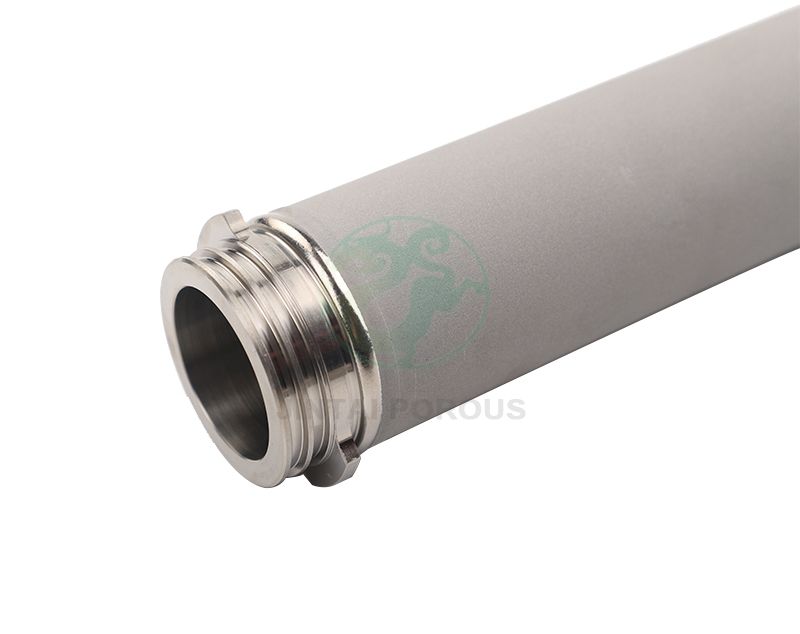
Threaded, welded, press-fit, flanged, and adhesive-free connections are common options. For corrosive service, the connection material and weld design must match the porous media. A chemically resistant filter can still fail if the fitting or weld corrodes first.
Step 4: Select the connection and shape
Sintered porous metal has a continuous metal structure. It does not rely on a thin membrane that can tear easily. This gives it strong resistance to vibration, pressure changes, and repeated cleaning. Many designs can be backwashed, blown back, or cleaned with suitable solvents.
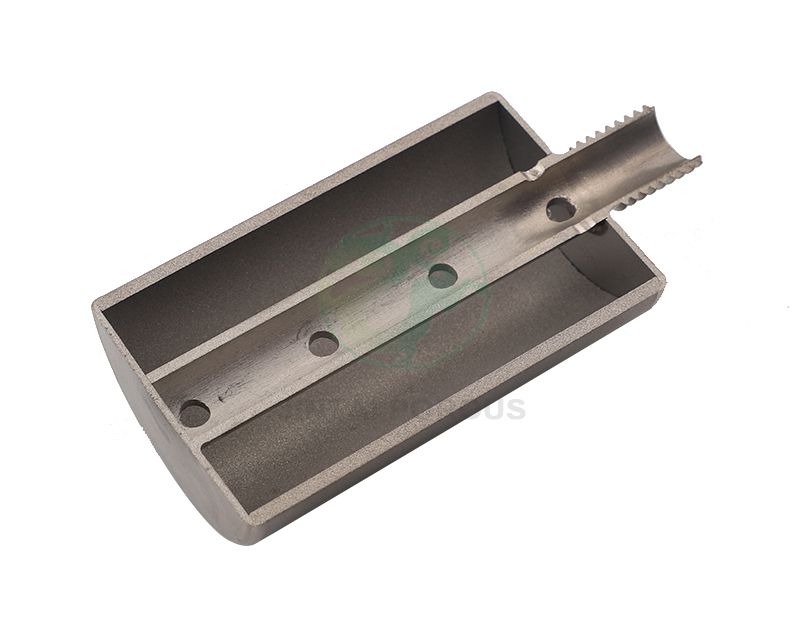
The component can also be made as one piece with an integrated frame or support. This reduces the number of seals and joints that may leak. With the right alloy, sintered metal can operate in temperatures where common plastic filter media lose shape or become brittle.
5. Why Sintered Porous Metal Performs Well in Chemical Processing
- Custom dimensions for new equipment and replacement projects.
- Stable pore size and repeatable flow performance.
- High strength for pressure and vibration service.
- Metal options for moderate and aggressive chemicals.
- Reusable designs that can lower waste and maintenance cost.
- Small trial orders followed by repeat production.
Advantages for overseas buyers and distributors
6. How JINTAI Controls Quality and Corrosion Risk
JINTAI uses controlled powder preparation, forming, sintering, sizing, cleaning, and inspection to produce porous metal components. Each stage affects the final pore network. A change in powder size or sintering temperature can change permeability, strength, and filtration performance.
Manufacturing and inspection flow
1. Review chemical and mechanical requirements
2. Confirm alloy, powder grade, and pore range
3. Form the powder into the required shape
4. Sinter under a controlled atmosphere
5. Size, machine, weld, or assemble the component
6. Clean and remove loose particles
7. Test dimensions, permeability, and pressure strength
8. Pack for export and provide inspection records
Tests buyers should request
Useful inspection data may include dimensional inspection, bubble point testing, air permeability, liquid flow testing, pressure testing, porosity measurement, and visual inspection. For critical chemical systems, buyers may also request material certificates, weld inspection, and a sample corrosion test using the actual process fluid.
Testing should use the same component thickness, pore rating, and alloy as the production part. A small flat sample may not represent the performance of a long tube or complex welded assembly.
7. Common Applications in Corrosive Industries
| Industry | Component | Main purpose |
|---|---|---|
| Chemical processing | Liquid filter or gas diffuser | Remove particles or improve gas-liquid contact |
| Water and wastewater | Diffuser and vent filter | Transfer oxygen and protect tanks from contamination |
| Electronics chemicals | High-cleanliness filter | Control particles in sensitive process fluids |
| Oil and gas | Flame arrestor or coalescing support | Improve safety and separate gases or liquids |
| Pharmaceutical production | Sanitary vent or gas sparger | Support clean processing and controlled aeration |
8. Mistakes to Avoid Before Placing an Order
- Choosing stainless steel only because it is called corrosion resistant.
- Using the smallest pore size without checking pressure drop.
- Ignoring the chemical effect of cleaning and sterilization.
- Comparing suppliers only by unit price.
- Failing to specify the filter flow direction.
- Using a different weld or fitting alloy from the filter media.
- Skipping sample testing in a new chemical application.
The lowest purchase price may not be the lowest operating cost. If a filter lasts three months instead of two years, labor, production loss, emergency freight, and contamination risk can exceed the original price difference.
9. Frequently Asked Questions
Are porous metal filters suitable for acids?
Yes, but suitability depends on the acid type, concentration, temperature, and exposure time. 316L may work in moderate conditions, while nickel alloys or titanium may be required for more aggressive service. Always confirm the complete chemical profile before production.
Can porous metal components be reused?
Many sintered metal filters can be cleaned and reused. Backwashing, air blowback, ultrasonic cleaning, or chemical cleaning may be possible. The cleaning method must not damage the alloy or alter the pore structure.
What pore size should I choose?
Choose the pore size from the required particle retention, bubble size, flow rate, and pressure drop. A finer pore rating is not always better. It may reduce flow and clog sooner. JINTAI can recommend a pore range after reviewing the process data.
Can JINTAI make custom porous metal shapes?
Yes. JINTAI supports custom discs, tubes, plates, cups, rings, cartridges, and assembled parts. Buyers can provide drawings, samples, or performance requirements. The design can then be reviewed for alloy, dimensions, pore structure, connection method, and inspection needs.
10. Final Selection Checklist
Before ordering porous metal components for corrosive chemical environments, confirm these points:
- Chemical name and concentration are documented.
- Normal and maximum temperatures are listed.
- Operating and test pressures are defined.
- Flow rate and pressure drop targets are clear.
- Pore size and filtration or diffusion purpose are agreed.
- Alloy includes the filter, fitting, and weld material.
- Cleaning and sterilization conditions are included.
- Samples or corrosion tests are planned for new applications.
- Inspection documents are defined before mass production.
The best porous metal component is not simply the one with the smallest pores or the lowest price. It is the part that combines chemical compatibility, stable flow, pressure strength, cleanability, and repeatable manufacturing. By matching the alloy and pore structure to the real process, industrial users can reduce unplanned replacement and protect product quality.
For custom sintered porous metal filters, spargers, vent plugs, and flow-control components, JINTAI can review your drawing or application data and develop a suitable production solution for corrosive chemical service.