
New energy manufacturers need stable porous metal filters to remove small particles without stopping production. In battery slurry filtration, pore size control helps protect coating quality and reduce product defects. For hydrogen purification and fuel cell gas treatment, a sintered porous metal filter can separate solids while handling heat, pressure, and repeated cleaning.
This guide explains how porous metal filtration works, where it is used, how to select the right filter, and why JINTAI asymmetric filter elements are suitable for fine particle separation in battery, hydrogen, and fuel cell processes. The main design range discussed is 1 to 5 micron filtration, but the final choice must match the process test results.


New energy products often contain fine powders, catalysts, metal particles, and process residues. A small amount of contamination can cause coating lines to block, fuel cell layers to lose performance, or hydrogen equipment to suffer from valve and compressor wear.
Many production lines also use high-viscosity liquids or high-pressure gases. A filter must remove particles while keeping flow stable. It must also resist corrosion, temperature changes, vibration, and repeated cleaning. Disposable polymer filters may not provide the required strength for these conditions.

- Particle contamination causes battery coating defects.
- Filter blockage increases differential pressure and energy use.
- Frequent replacement increases labor and operating cost.
- Weak filter media may collapse under pressure surges.
- Some filter materials react with solvents, electrolytes, or hydrogen process gases.
- Unstable filtration produces inconsistent product quality between batches.
1. Why Fine Particle Separation Is Critical in New Energy Manufacturing
A sintered porous metal filter is made by pressing metal powder into a planned shape and heating it below the full melting point. The powder particles join together and form a network of controlled pores. This structure allows fluid to pass while retaining particles larger than the effective filtration rating.
A porous asymmetric filter element has different pore structures across its thickness. The outer or upstream layer can provide strong particle capture, while the inner support layers provide flow and mechanical strength. This design may hold more contaminant than a simple uniform filter media.
Common customer pain points
Fine particles are first captured near the working surface. Some smaller particles then move into the pore network and are retained by depth filtration. The result is a balance between clean flow, particle retention, and service life. The best structure depends on particle size distribution, fluid viscosity, flow rate, and pressure.
2. How Sintered Porous Metal Filters Separate Fine Particles
| Term | Meaning | Why it matters |
|---|---|---|
| Pore size | The planned opening range in the filter media | Affects particle retention and flow |
| Flow rate | Fluid volume passing through per unit of time | Shows whether production capacity can be met |
| Differential pressure | Pressure before the filter minus pressure after it | Indicates resistance and filter loading |
| Bubble point | Pressure needed to push gas through a wetted pore | Helps check pore structure and integrity |
| Cleaning cycle | The number of usable clean and reuse operations | Affects total ownership cost |
Surface filtration and depth support
Important filter performance terms
Cathode and anode slurries contain active material, conductive carbon, binders, and solvents. Large particles, agglomerates, and foreign matter can damage coating dies or create pinholes in the electrode layer. A stainless steel porous filter can be installed before the coating head or in the slurry circulation loop.
For many battery slurry filtration systems, the target range is selected between 5 and 25 microns. A finer rating may be used when the process requires stronger protection, but it can increase pressure loss. Testing is necessary because slurry viscosity can change with solid content and temperature.
3. Main New Energy Applications
Electrolytes must be protected from metal particles, dust, and manufacturing residue. A suitable filter element can support electrolyte filling and circulation by reducing contamination before the liquid enters the cell. Material compatibility is essential because organic solvents can affect unsuitable sealing materials or filter components.
3.1 Battery slurry filtration
Hydrogen systems may include compressors, valves, storage equipment, and fuel cell stacks. Fine solids from pipes, seals, catalysts, or assembly work can damage sensitive parts. Porous metal gas filters provide a strong barrier and can work in high-pressure gas lines when the housing, gasket, and filter grade are properly matched.
In hydrogen purification, the filter normally removes solid particles and liquid mist. It does not replace a membrane, pressure swing adsorption unit, or chemical purifier designed to remove dissolved gases. This distinction helps engineers select a complete purification system instead of expecting one filter to perform every separation task.
3.2 Electrolyte filtration
Fuel cell systems need clean air and clean reactant gases. Dust and catalyst particles can reduce gas flow or affect the gas diffusion layer. A sintered metal filter can be used as a durable pre-filter or process filter where temperature, vibration, and cleaning requirements are higher than those of a standard disposable filter.
3.3 Hydrogen purification and gas treatment
Battery recycling lines handle abrasive powders, solvents, and mixed process streams. Porous metal filter elements can support solid-liquid separation and help recover valuable powder. Their rigid structure is useful when the process includes backwashing, vibration, or pressure changes.
3.4 Fuel cell air and reactant protection
3.5 Battery recycling and metal powder recovery
No filter type is correct for every application. The right option depends on temperature, pressure, chemical exposure, particle loading, cleaning method, and required service life.
| Filter type | Main benefit | Main limitation | Typical new energy use |
|---|---|---|---|
| Sintered porous metal | High strength, cleanable, heat resistant | Higher initial cost | Slurry, gas, electrolyte, recycling |
| Polymer membrane | Low weight and wide chemical options | Lower strength at high temperature | Low-pressure liquid filtration |
| Metal mesh | Open structure and easy cleaning | Less depth capture for fine particles | Coarse protection and pre-filtration |
| Ceramic filter | Very high temperature resistance | Brittle under impact or vibration | High-temperature gas processes |
4. Porous Metal Filters Compared with Other Filter Types
A filter should not be selected by pore size alone. The following process gives overseas buyers and distributors a clear method for matching a JINTAI filter element to the operating line.
- Define the fluid: slurry, electrolyte, water, hydrogen, air, or another gas.
- Measure the largest unwanted particle and the normal particle size distribution.
- Record flow rate, operating temperature, pressure, and pressure fluctuation.
- Check viscosity, solid concentration, solvent type, and chemical compatibility.
- Select the filter material, such as stainless steel, nickel alloy, or titanium.
- Choose a starting pore rating and compare clean pressure drop with required flow.
- Confirm connection size, element length, sealing method, and housing design.
- Run a sample test and record particle retention, pressure rise, and cleaning results.
- Approve the final element after repeat testing with actual production fluid.
5. Step-by-Step Filter Selection Process
- Process fluid identified
- Particle size and contamination source measured
- Pressure, temperature, and flow recorded
- Material compatibility checked
- Pore size and asymmetric structure selected
- Prototype tested in the actual line
- Cleaning cycle and service life verified
- Production filter approved
Selection flow chart
Blockage often comes from an incorrect filter grade, poor upstream mixing, excessive flow, or a high concentration of agglomerates. A finer filter is not always better. If the pore rating is too fine for the process load, the filter may reach its pressure limit quickly.
6. How to Reduce Blockage and Extend Filter Service Life
A coarse pre-filter can remove large particles before the fine porous metal element. For example, a line may use a 50 micron protection stage followed by a 5 micron final stage. This arrangement can reduce the load on the final filter and make cleaning easier.
Use staged filtration
Install pressure gauges before and after the filter. The difference shows the condition of the element. A gradual pressure increase usually indicates normal particle loading. A sudden increase may indicate an agglomerate, incorrect installation, or a process problem.
Control the pressure rise
Sintered metal filters can often be cleaned with backwash, liquid flushing, ultrasonic cleaning, chemical cleaning, or controlled thermal treatment. The correct method depends on the retained material and the filter alloy. Cleaning should be validated to avoid deformation, residue, or damage to the sealing area.
Plan the cleaning method
JINTAI manufactures sintered porous asymmetric filter elements for industrial filtration systems. Stainless steel is commonly selected for general liquid and gas service because it offers strength and corrosion resistance. Titanium may be considered for special chemical environments, low-density design needs, or applications that require strong corrosion resistance.
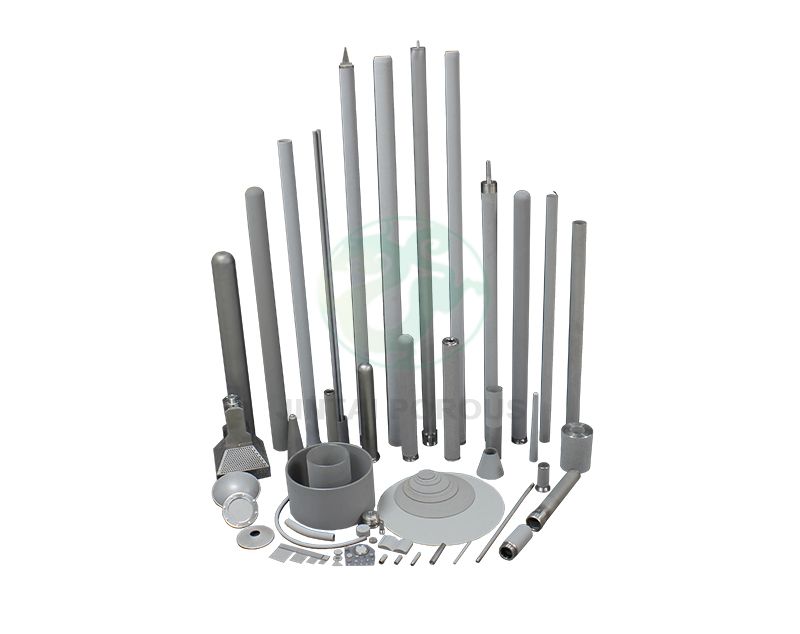
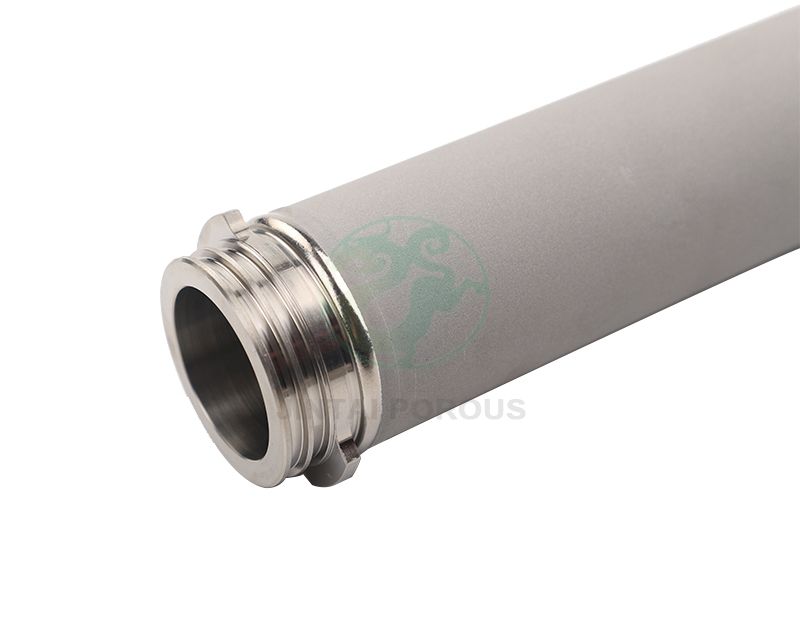
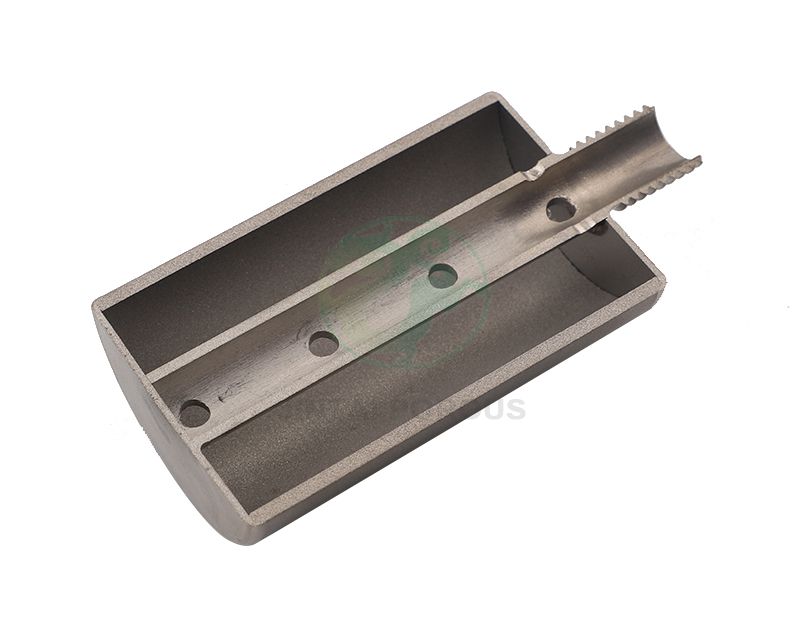
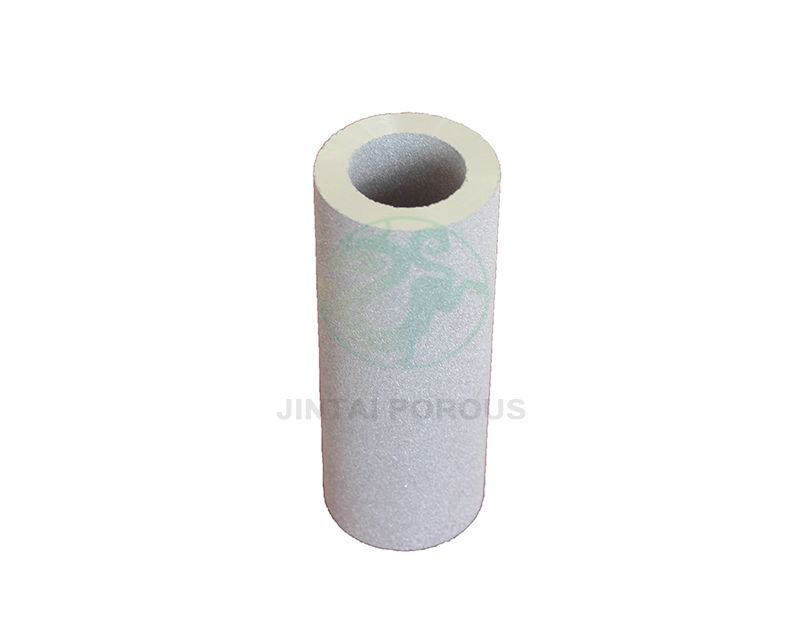
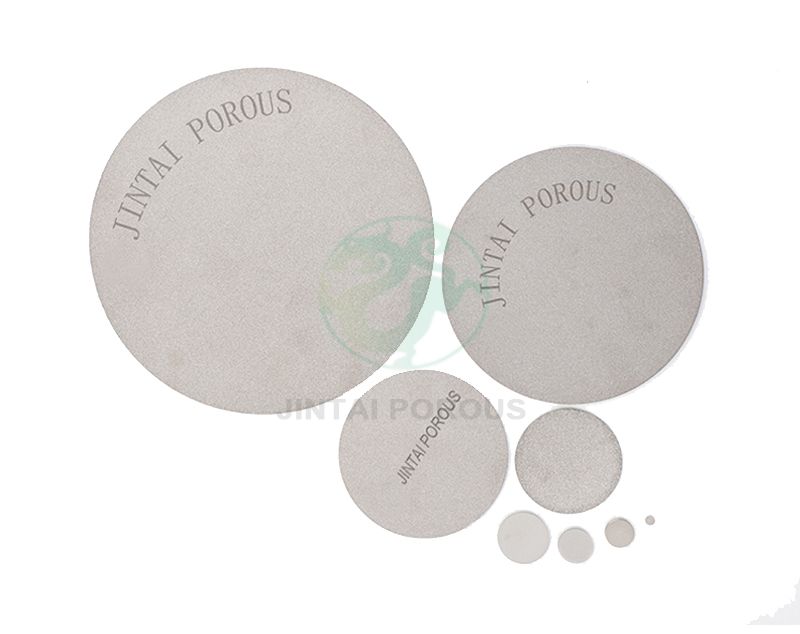
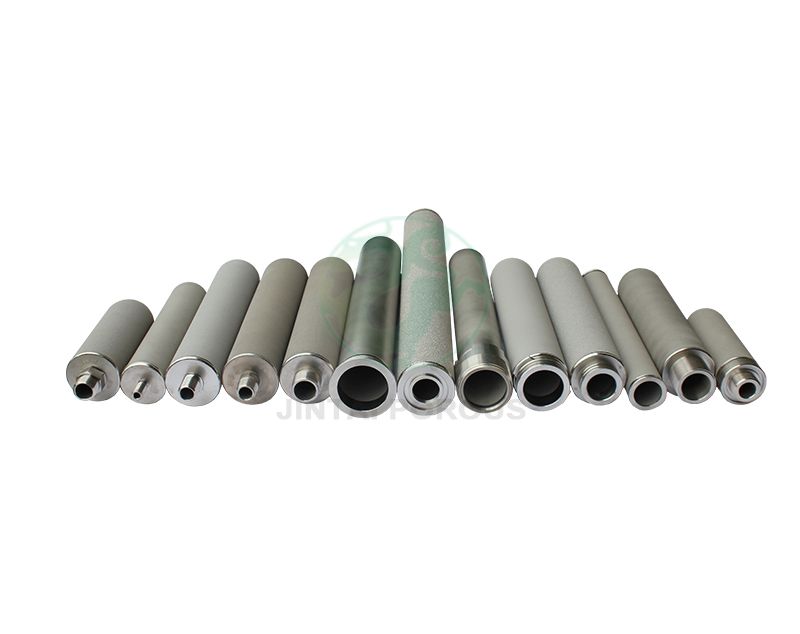
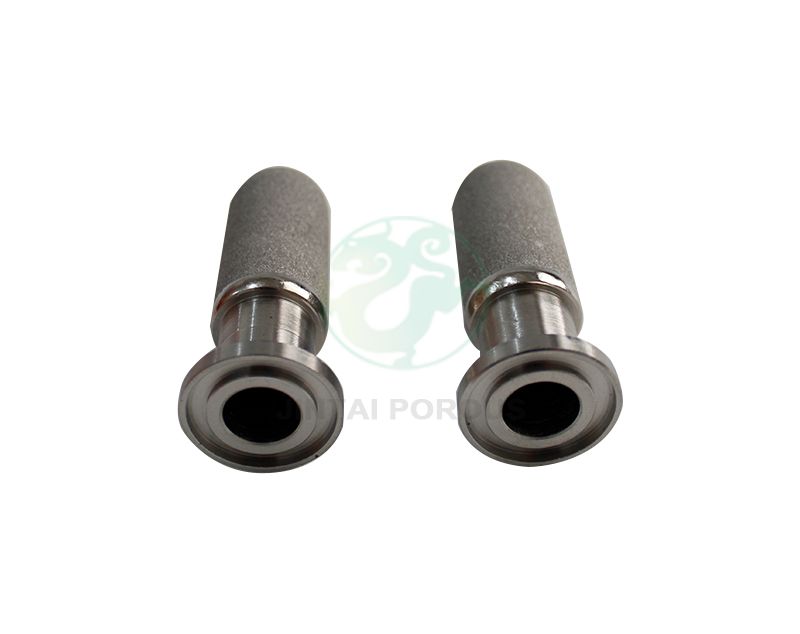
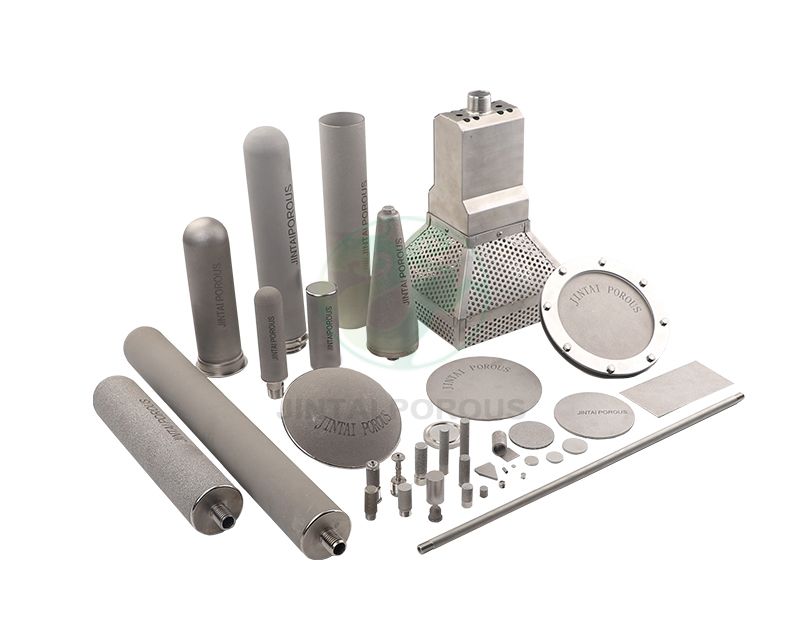
The element can be designed as a tube, disc, plate, candle, or custom shape. Connection details may include threaded ends, welded ends, flanges, or customer-specified fittings. The filter can also be adapted to the available housing and flow direction.
For overseas buyers, technical communication is most effective when the inquiry includes fluid name, flow rate, pressure, temperature, target particle size, solids concentration, housing drawing, and cleaning method. These details allow JINTAI to recommend a tested structure instead of supplying a general filter with uncertain performance.
7. Materials and Design Options from JINTAI
8. Cost and Performance Factors Buyers Should Compare
The purchase price is only one part of filter cost. A low-cost element may require more frequent replacement, create more production downtime, or cause a higher pressure drop. A reusable metal filter may offer better value when the process includes regular cleaning and high contamination loading.
| Cost factor | Question to ask | Useful measurement |
|---|---|---|
| Initial purchase | Does the element fit the current housing? | Unit price and installation cost |
| Flow efficiency | Will the filter meet the required flow? | Flow rate at clean pressure drop |
| Service life | How long does it operate before cleaning? | Hours or production batches |
| Cleaning | Can the element be cleaned without damage? | Number of validated cleaning cycles |
| Product protection | Does filtration reduce downstream defects? | Particle count and reject rate |
9. Frequently Asked Questions
What pore size is best for battery slurry?
There is no universal pore size. Many systems begin testing in the 5 to 25 micron range, then adjust the rating after checking slurry viscosity, agglomerate size, flow, and coating quality. The final filter should protect the coating equipment without causing excessive pressure loss.
Can porous metal filters be reused?
Yes, many sintered metal elements can be cleaned and reused. The actual number of cycles depends on the metal, retained particles, cleaning chemical, temperature, pressure, and handling method. A cleaning validation test is recommended before setting a replacement schedule.
Are porous metal filters suitable for hydrogen?
They can be suitable for solid particle removal in hydrogen lines when the alloy, porosity, housing, and seals meet the operating conditions. The complete assembly should be tested for pressure, leakage, cleanliness, and material compatibility.
What information should an overseas buyer send for a quotation?
Send the application, fluid, flow rate, pressure, temperature, target filtration rating, particle type, concentration, dimensions, connection, and cleaning method. A drawing or photo of the current filter housing is also useful. JINTAI can then review the required asymmetric structure and custom element design.
10. Conclusion: Select the Filter by Process Data, Not by Micron Rating Alone
Porous metal filters support fine particle separation in battery slurry filtration, electrolyte filtration, hydrogen purification, fuel cell protection, and battery recycling. Their main advantages are high mechanical strength, controlled porosity, cleanability, and suitability for demanding process conditions.
A 1 to 5 micron filter may be suitable for some final protection duties, while other new energy processes need a coarser pre-filter or a staged system. The best result comes from matching pore structure, alloy, flow area, pressure drop, and cleaning method to real production data.
JINTAI recommendation: begin with a process sample, measure particle loading and pressure rise, test the cleaning cycle, and confirm the filter element in the actual line. This approach helps overseas manufacturers and distributors reduce contamination risk, improve equipment protection, and select a reliable long-life filtration solution.